Global Health Hair

EN

Category: Hair Transplant Turkey

Expert guides and honest answers about hair transplant in Turkey for UK patients.

  • The Complete Guide to Hair Transplant in Turkey for UK Patients

    The Complete Guide to Hair Transplant in Turkey for UK Patients

    Written and medically reviewed by Dr. Merdan Çelik MD, who has dedicated 22+ years exclusively to hair restoration surgery, and attended the ISHRS FUE Hands-On Cadaver & Live Surgery Workshop (2019).


    Every year, more than 50,000 patients from the United Kingdom travel to Turkey for a hair transplant. That figure is not a marketing claim — it is a documented pattern driven by a simple reality: the NHS does not cover hair loss treatment, private clinics in the UK charge between £5,000 and £15,000 for a procedure that costs a fraction of that price in Istanbul, and the flight from London is barely four hours.

    The savings can reach £6,500 to £11,500 on a single trip. For most patients, the question is no longer whether to consider Turkey — it is how to do it safely and intelligently.

    This guide covers everything: safety, costs, techniques, how to vet a clinic, what the trip looks like day by day, recovery, and the ten questions UK patients ask most often. No filler, no false reassurance — just the information you need to make a confident, well-informed decision.


    1. Is Hair Transplant in Turkey Safe?

    The direct answer

    Yes — if you choose correctly. Turkey is home to some of the world’s highest-volume, most experienced hair transplant surgeons. Istanbul alone performs more hair transplant procedures than any other city on the planet. The problem is not the country; the problem is the segment of the market that has commercialised the procedure to the point where corners are cut.

    The three real risks (and why they have nothing to do with geography)

    1. Clinics where a doctor does not perform the surgery. In some operations — particularly the budget end of the market — a physician may be present only to sign paperwork, whilst unlicensed technicians carry out the extraction and implantation. This is the single largest risk factor in hair transplant tourism, regardless of the country.

    2. Technicians working without adequate supervision. Graft survival, hairline design, and angle of implantation all require surgical judgement. When a technician carries out these steps alone, the margin for error rises significantly — and the consequences (patchy growth, unnatural angles, scarring) are difficult to correct.

    3. No structured aftercare once you return home. A hair transplant is a medical procedure that has a twelve-month recovery arc. Clinics that treat you as a one-time transaction will not be reachable for questions, complications, or follow-up assessments once you land back at Gatwick.

    How to mitigate all three risks

    • Confirm that the operating surgeon holds an MD degree (Tıp Doktoru in Turkey) — a legal minimum for performing transplant surgery, but one that not every clinic advertises clearly.
    • Ask who will actually perform the surgery — the doctor or technicians — and ask for it in writing. That single answer tells you more than any society membership.
    • Check independent review platforms — Trustpilot in particular — rather than relying solely on testimonials published on the clinic’s own website.
    • Ask explicitly: “Who will perform the surgery? Will the doctor be present for every step?”

    Dr. Merdan Çelik MD at Global Health Hair operates personally on every patient and attended the ISHRS FUE Hands-On Cadaver & Live Surgery Workshop. We raise this not to advertise, but because these two facts are exactly the standard you should be requiring from any clinic you shortlist.


    2. How Much Does Hair Transplant in Turkey Cost for UK Patients?

    The real price range

    A reputable, all-inclusive hair transplant package in Turkey costs between €1,500 and €4,000. Global Health Hair’s packages start at €1,990 (approximately £1,700 at current exchange rates — indicative only, not a fixed commitment).

    Budget operations advertised below €1,200 almost always involve technicians rather than surgeons. Premium boutique clinics in Istanbul charge up to €5,000–€7,000, comparable to entry-level UK pricing.

    What a legitimate all-inclusive package should cover

    • Pre-operative medical consultation and blood tests
    • The surgical procedure itself (FUE or DHI), performed by an MD
    • Local anaesthesia and all operating theatre costs
    • 3 nights in a Premium Boutique Hotel
    • VIP airport–hotel–clinic transfers on all days
    • Post-operative care kit (specialist shampoo, spray, instructions)
    • 12-month follow-up via video consultation
    • A dedicated patient coordinator who speaks English

    Red flags in “cheap” packages

    • Hotel and transfers sold separately (cost escalates once you arrive)
    • Price quoted per graft with no fixed ceiling — final bill can double
    • No mention of who performs the surgery
    • No aftercare or follow-up included

    UK vs Turkey: cost comparison

    Item UK (Private) Turkey — GHH
    FUE procedure (2,000–3,000 grafts) £5,000–£10,000 from €1,990
    DHI / Choi pen £7,000–£15,000 from €2,175
    Hotel (3 nights) £300–£600 (extra) Included
    Airport transfers N/A Included
    12-month follow-up Often charged extra Included
    Indicative total £5,500–£15,000+ €1,990–€4,000

    Why is it so much cheaper in Turkey?

    Not because of lower standards. The price differential reflects lower operating costs — salaries, rent, malpractice insurance, and healthcare overheads are fundamentally different in Turkey compared with the UK. A surgeon in Istanbul can perform more procedures annually than a UK counterpart simply because the referral base is larger and the infrastructure is built around high volume. Lower cost-per-procedure does not mean lower care.


    3. FUE vs DHI — Which Technique Is Right for You?

    FUE Sapphire (Follicular Unit Extraction)

    In FUE, individual follicular units are extracted from the donor area using a micro-punch tool and then implanted one by one into channels opened in the recipient area. The “Sapphire” variant uses blades made from synthetic sapphire, which allow smaller, more precise incisions and reduce post-operative swelling.

    Best for: larger areas requiring 2,500–4,500+ grafts, patients comfortable with a shaved donor area, cases where maximum graft density is the priority.

    GHH price: from €1,990 all-inclusive.

    DHI (Direct Hair Implantation — Choi pen)

    DHI uses a specialised pen-like tool (Choi implanter) to extract and implant each graft in a single step, without pre-opening channels. This gives the surgeon greater control over depth, direction, and angle of each hair.

    Best for: patients who prefer not to shave the recipient area (popular for crown and hairline work), cases where precise angle control is critical for a natural-looking result, adding density to thinning areas alongside existing hair.

    GHH price: from €2,175 all-inclusive.

    How Dr. Çelik decides

    Dr. Merdan Çelik MD conducts a digital analysis of donor density, assesses the Norwood/Hamilton grade of alopecia, and discusses the patient’s lifestyle preferences before recommending a technique. In some cases, a combination approach is used — FUE for the bulk of the transplanted area and DHI for fine detailing along the hairline.

    There is no universally “better” technique. The best choice is the one designed specifically for your scalp, your donor capacity, and your expectations.


    4. How to Choose a Hair Transplant Clinic in Turkey: 7 Verified Criteria

    The following checklist is based on the questions that distinguish safe, quality clinics from those operating primarily as tourism packages.

    Checklist: ask every clinic before you book

    1. Does an MD surgeon perform the procedure — or technicians?
      This is the most important question you will ask. In Turkey, performing surgery legally requires an MD (Tıp Doktoru). Ask for the surgeon’s name, credentials, and confirm they will be present for the entire procedure — extraction and implantation, not just the consultation.
    2. Can they give you the surgeon’s medical registration number?
      A licence to operate comes from the state, not from a professional society. Every doctor practising in Turkey has a registration number, and a clinic that will not give you theirs in writing is telling you something. Professional memberships — the ISHRS among them — are optional, cost a fee, and are not a licence to practise. They are useful context; they are not proof that the person holding the instrument is qualified to operate on you.
    3. Are the before-and-after photos from their own patients?
      Many clinics use stock images or photos sourced from other clinics. Ask for verifiable cases — ideally with patient consent references — and look for consistent photographic style (same lighting, same angle, same clinic background).
    4. How many procedures has the surgeon personally performed?
      Experience matters enormously in hair transplant surgery. A surgeon with 1,000+ personal procedures is a very different proposition to a technician who joined the team six months ago. Ask specifically about the surgeon, not the clinic’s aggregate volume.
    5. Are there verified reviews on independent platforms?
      Reviews on a clinic’s own website are not independently verified. Check Trustpilot, Google Reviews, and patient forums. Look for patterns in negative reviews as much as positive ones — how does the clinic respond to complaints?
    6. What exactly is included in the price?
      Get a written breakdown: hotel, transfers, graft count (and what happens if you need more than quoted), post-operative kit, follow-up consultations. “All-inclusive” means different things to different clinics.
    7. What aftercare do they provide once you return to the UK?
      Recovery continues for 12 months after the procedure. You will have questions — about shedding, growth, redness, itching. Confirm that the clinic offers remote follow-up consultations in English, and that you will have a named contact, not just a generic WhatsApp group.

    Global Health Hair meets all seven criteria. Dr. Merdan Çelik MD operates personally on every patient, attended the ISHRS FUE Hands-On Cadaver & Live Surgery Workshop, and our patients’ results are documented and available for review on independent platforms. We include 12-month follow-up in every package, with a dedicated English-speaking coordinator throughout.


    5. The 4-Day Turkey Hair Transplant Trip — What to Expect

    Getting there: flights from the UK

    Istanbul is approximately 4 hours from London. Two main airports serve the city:

    • Istanbul Airport (IST) — served by British Airways, Turkish Airlines; from Heathrow and Gatwick.
    • Sabiha Gökçen Airport (SAW) — served by easyJet, Pegasus, Wizz Air; from Gatwick and Stansted. Often the cheaper option, from £60–200 return.

    Our VIP transfer service collects you from whichever airport you arrive at — there is no need to navigate the city on your own.

    Day-by-day breakdown

    Day 1 — Arrival: Your driver meets you at the airport and takes you directly to your Premium Boutique Hotel. In the evening, you can rest, explore the local area, or have a light meal. You will receive confirmation of your appointment time for the following morning.

    Day 2 — Surgery day: You are transferred to the clinic by 8:00–9:00am. Dr. Merdan Çelik MD conducts a final consultation, reviews your hairline design, and confirms the graft plan. Surgery takes 6–8 hours depending on the number of grafts, with breaks included. You return to the hotel in the early evening. Mild discomfort and tightness are normal; you are provided with a complete post-operative kit and written instructions.

    Day 3 — First post-op day: Return to the clinic for a follow-up assessment and your first specialist wash, carried out by the clinical team. Dr. Çelik reviews healing progress. The rest of the day is yours — most patients feel well enough to walk and eat normally.

    Day 4 — Departure: Check-out and VIP transfer back to the airport. You are cleared to fly from the day after surgery in most cases, though day 4 is the more comfortable choice.

    What you should NOT do in the first 72 hours

    • Swimming or submerging the scalp in water
    • Direct sun exposure on the transplanted area
    • Strenuous physical exercise or heavy lifting
    • Wearing tight-fitting hats or helmets
    • Touching or scratching the grafted area

    Planning the trip itself? Follow the step-by-step UK patient guide — booking, flights, packing and the day-by-day schedule.

    6. Recovery and Results: What to Expect Month by Month

    The single most repeated instruction of the first week is the saline spray: how often to use it and for how long, including what to do if you run out while travelling home.

    Hair transplant results do not appear overnight. Understanding the timeline prevents unnecessary anxiety and helps you make decisions — about sun exposure, haircuts, exercise — that protect your investment.

    The recovery timeline

    Week 1–2 — Initial healing: Redness and scabbing in the recipient area. Small crusts form around each graft and fall away naturally within 10–14 days. Do not pick at them.

    Week 2–6 — Shock loss: Most patients experience a phase where the newly transplanted hairs shed. This is called shock loss, it is entirely normal, and it does not mean the procedure has failed. The follicle remains alive beneath the surface.

    Month 1–3 — Dormant phase: The transplanted follicles enter a resting phase. The scalp may look similar to or thinner than before surgery. This is the phase that tests patience most.

    Month 3–6 — First visible growth: Fine, new hairs begin to emerge. They may initially appear thin or wispy; this is normal as the hair shaft gradually thickens.

    Month 6–12 — Progressive improvement: Hair density, thickness, and coverage increase steadily. Most patients see 70–80% of their final result by month nine.

    Month 12 — Final result: The full outcome is assessable at twelve months. Dr. Merdan Çelik MD schedules a final remote review consultation at this stage.

    Month-by-month reference table

    Month What to expect What to avoid
    1–2 Scabbing, redness, shock loss Sun, swimming, scratching
    3 Dormant phase, minimal visible change Heavy exercise, harsh shampoos
    4–6 Fine new hairs emerging Tight hats, direct heat
    7–9 Noticeable density and coverage No major restrictions
    10–12 Full, assessable result No restrictions

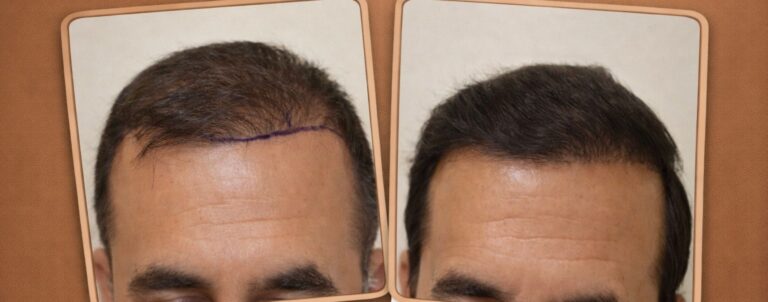
    Real Hair Transplant Results

    Genuine before & after photos from patients treated by Dr. Çelik at Global Health Hair.
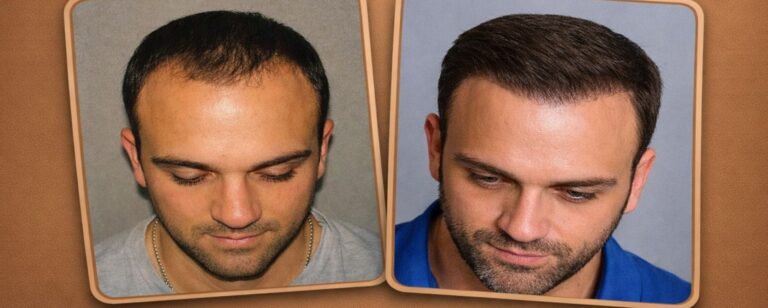
    Hair transplant Turkey before and after result 3Before and after hair transplant in Turkey: receding hairline with donor area marked, restored to a natural frontal hairline, performed by Dr. Merdan Celik, MD at Global Health Hair, IstanbulBefore and after hair transplant in Turkey: crown baldness restored to full density, top-down view, performed by Dr. Merdan Celik, MD at Global Health Hair, IstanbulBefore and after hair transplant in Turkey: thinning frontal hairline rebuilt with natural density, performed by Dr. Merdan Celik, MD at Global Health Hair, Istanbul

    See more real patient results →

    What Is Our Istanbul Clinic Like?

    Global Health Hair is located in the heart of Şişli, Istanbul – modern, clean, and designed for a calm, private patient experience from arrival to recovery. See our full guide to the Istanbul trip.

    Global Health Hair clinic in Istanbul 1Global Health Hair clinic in Istanbul 2Global Health Hair clinic in Istanbul 3

    Where Will You Stay in Istanbul?

    Your all-inclusive package includes a Premium Boutique Hotel in the Şişli district of Istanbul, at the same location as the clinic, with modern rooms, breakfast, and a 24/7 team. View clinic & hotel location on Google Maps.

    Premium Boutique Hotel included in your hair transplant Turkey package 1Premium Boutique Hotel included in your hair transplant Turkey package 2Premium Boutique Hotel included in your hair transplant Turkey package 3Premium Boutique Hotel included in your hair transplant Turkey package 4

    7. Frequently Asked Questions — Hair Transplant Turkey for UK Patients

    1. How much does a hair transplant in Turkey cost for UK patients?

    A reputable all-inclusive package costs between €1,500 and €4,000, depending on the technique and graft count. Global Health Hair packages start at €1,990 for FUE and €2,175 for DHI, including hotel, transfers, and 12-month follow-up. By comparison, equivalent procedures in the UK cost between £5,000 and £15,000 — without hotel or transfers.

    2. Is it safe to have a hair transplant in Turkey?

    Yes, provided you choose a clinic where a qualified MD surgeon performs the procedure, not unsupervised technicians. Turkey has a well-established medical infrastructure for hair restoration — the concern is not the country itself but the commercialised segment of the market where clinical standards are deprioritised. Verify surgeon credentials (MD degree + state medical registration number), read independent Trustpilot reviews, and ask who specifically will carry out your surgery.

    3. How long do I need to stay in Turkey?

    Most UK patients plan a 4-day trip: arrival, surgery day, first post-op appointment, and departure. Some patients prefer to stay a fifth day for additional rest before flying. You are medically cleared to fly as early as 24 hours post-surgery, but a two-night rest period is more comfortable and recommended.

    4. What is included in an all-inclusive package?

    A legitimate all-inclusive package should cover: the surgical procedure, pre-operative tests, local anaesthesia, 3 nights in a Premium Boutique Hotel, VIP airport and clinic transfers, post-operative care kit, and at least one remote follow-up consultation. If hotel or transfers are listed as optional extras, the headline price is misleading — factor in the real cost before comparing.

    5. Can I fly the day after my hair transplant?

    Technically yes — flying does not damage hair grafts, and cabin pressure has no effect on the transplanted area. However, most surgeons (including Dr. Merdan Çelik MD) recommend at least one post-operative review appointment the morning after surgery before you travel. A 4-day trip (surgery on day 2, departure on day 4) is the standard we recommend for UK patients.

    6. Will my results look natural?

    Natural results depend primarily on hairline design and angle of implantation — both surgical decisions that require an experienced MD, not a technician following a template. Dr. Çelik designs each hairline individually based on facial proportions, age-appropriate aesthetics, and the patient’s existing hair characteristics. When grafts are implanted at the correct angle and direction, the results are indistinguishable from naturally grown hair at 12 months.

    7. What if something goes wrong after I am back in the UK?

    This is one of the most important questions to ask before booking. Global Health Hair provides a dedicated English-speaking coordinator, WhatsApp access to the clinical team, and scheduled video consultations at one month, three months, six months, and twelve months post-surgery. In the rare event of a complication requiring in-person assessment, we coordinate with partner clinics or provide guidance on appropriate UK referrals. Clinics that become unreachable after your departure should be avoided entirely.

    8. Do I need a consultation before booking?

    Yes — and any reputable clinic will insist on it. A proper consultation reviews your donor density, degree of hair loss, medical history, and expectations. At Global Health Hair, the initial consultation is free, conducted via video call with Dr. Merdan Çelik MD personally, and results in a specific graft count estimate and technique recommendation before any commitment is made.

    9. What is the difference between FUE and DHI?

    FUE (Follicular Unit Extraction with Sapphire blades) extracts grafts and implants them into pre-opened channels — well-suited for larger areas and higher graft counts, from €1,990. DHI (Direct Hair Implantation via Choi pen) extracts and implants in a single step, offering greater control over angle and direction, no-shave options, and better results for density addition to existing hair, from €2,175. Dr. Çelik recommends the technique (or combination) most appropriate for your specific anatomy and goals.

    10. How many grafts will I need?

    This depends on your current degree of hair loss (Norwood scale) and your target coverage. As a general guide: a receding hairline typically requires 1,500–2,500 grafts; a thinning crown 1,000–2,000 grafts; more advanced loss (Norwood 4–6) may require 3,000–5,000 grafts. Your exact number is determined during the free consultation with Dr. Çelik, based on digital donor density analysis and a clear discussion of realistic outcomes.


    Ready to Take the Next Step?

    If you have read this far, you are doing the right thing: making an informed decision rather than booking blindly. The next step is a free, no-obligation consultation with Dr. Merdan Çelik MD — a genuine medical conversation about your specific hair loss, your options, and what realistic results look like for you.

    No sales pressure. No commitment. Just an honest assessment from a qualified surgeon.

    Book your free consultation today

    Speak directly with Dr. Merdan Çelik MD · English-speaking team · No commitment required


    💬 Chat on WhatsApp

    Or email us at [email protected]

    You can also complete our short online consultation form and we will be in touch within 24 hours with a personalised assessment and indicative quote.

    Global Health Hair is reviewed by real patients on Trustpilot. We encourage you to read them before making any decision.


    Related reading: Cost & packages · FUE vs DHI · FAQ · Real results

    For this year’s pricing in detail, see our hair transplant cost guide for Turkey.

    Planning when to travel? See the best time of year for a hair transplant in Turkey.


  • FUE vs DHI Hair Transplant: Which Is Right for You?

    FUE vs DHI Hair Transplant: Which Technique Is Right for You?

    FUE and DHI extract follicles the same way but differ in implantation. FUE pre-opens recipient sites with Sapphire blades before placing grafts by hand — suited to large graft counts. DHI uses a Choi pen to extract and implant in one motion, giving finer control for hairline density. Dr. Merdan Çelik MD recommends FUE for extensive thinning, DHI for refinement.

    This guide explains both methods plainly, outlines the meaningful differences, and gives you a clear framework for deciding which approach to discuss with your surgeon.

    How Does FUE Work?

    In Follicular Unit Extraction, individual follicular units (naturally occurring groups of 1–4 hairs) are extracted one by one from the donor area — typically the back and sides of the scalp — using a micro-punch tool with a diameter of 0.6–1.0 mm. The extracted grafts are then sorted, kept in a preservation solution, and implanted into recipient sites that the surgeon has pre-opened using fine blades or needles.

    The key characteristics of FUE:

    • No linear scar (unlike the older FUT/strip technique)
    • Tiny circular scars at donor sites — invisible once hair grows back
    • Suitable for very large graft counts (2,000–4,000+ grafts in a single session)
    • Slightly longer time between extraction and implantation (grafts are stored while sites are opened)

    How Does DHI Work?

    Direct Hair Implantation uses the same extraction method as FUE — individual follicular units removed with a micro-punch — but changes the implantation step fundamentally. Instead of pre-opening recipient sites and placing grafts into them, DHI uses a specialised hollow needle pen (the Choi implanter pen) to simultaneously create the recipient site and place the graft in a single motion.

    The key characteristics of DHI:

    • No pre-opening of recipient sites — placement and implantation happen together
    • Reduced time grafts spend outside the body (shorter out-of-body interval)
    • Greater precision in controlling implantation angle and direction
    • Can be used to implant between existing hairs without shaving (unshaved DHI)
    • Slightly slower process — requires more time per session for the same graft count
    • Typically priced higher than FUE due to additional equipment and technique demands

    What Are the Key Differences Between FUE and DHI?

    In one sentence: FUE Sapphire is the choice for covering larger areas at higher graft counts, while DHI (Choi implanter pen) offers finer angle control for hairline work and can be done without shaving — at Global Health Hair both are performed personally by Dr. Merdan Çelik, MD, from €1,990 (FUE Sapphire) or €2,175 (DHI) all-inclusive.

    Factor FUE DHI
    Extraction method Micro-punch (typically 0.7–1.0 mm), individual follicles Micro-punch (typically 0.7–1.0 mm), individual follicles
    Implantation method Pre-opened sapphire-blade slits + manual placement Choi pen — simultaneous site + graft
    Graft out-of-body time Longer (sites opened first) Shorter (placement immediate)
    Angle/direction control Good Very precise
    Density per session Higher graft counts per session — up to 4,500+ in extensive cases (see our Norwood guide) Slightly lower per session — focus on dense packing and precision
    Shaving required Yes (donor and recipient area) Not always (unshaved DHI possible)
    Typical session length 6–8 hours 6–8 hours
    Recovery time 7–10 days visible healing 7–10 days visible healing
    Scarring Tiny circular dots (donor only) Tiny circular dots (donor only)
    Best for Large areas, significant thinning Hairline refinement, dense packing, existing hair areas
    Price at GHH From €1,990 all-inclusive From €2,175 all-inclusive

    Who Should Choose FUE?

    FUE is the most versatile technique and remains the most widely performed hair transplant method globally. It is typically the better choice when:

    • You have significant hair loss (Norwood grade 3–6) requiring a large graft count
    • You need coverage over a large area — crown, mid-scalp, and hairline
    • You are comfortable with shaving your hair for the procedure
    • You want the most cost-effective route to maximum coverage
    • You are having a second or revision transplant covering previously grafted areas

    Who Should Choose DHI?

    DHI excels in specific clinical situations where precision outweighs the need for raw volume:

    • You want to increase density between existing hairs without removing them
    • You have early-stage or moderate hair loss (Norwood 1–3) where the hairline needs refinement rather than full reconstruction
    • You want to avoid shaving your existing hair (unshaved DHI option)
    • You are refining a previous transplant result
    • Hairline naturalness and directionality are your primary concern

    Quick-Reference Decision Guide

    Choose FUE if… Choose DHI if…
    You need 2,000+ grafts You need fewer than 2,000 grafts
    You have significant overall thinning You have localised thinning or hairline recession
    You are comfortable being shaved You want to keep existing hair length
    Cost is your primary concern Density and hairline precision are your priority
    You need maximum donor coverage You are adding density to existing hair

    What Will Your Surgeon Consider?

    In practice, the decision between FUE and DHI is rarely made by the patient alone. Dr. Merdan Çelik MD — 22+ years’ experience, 20,000+ patients treated — will assess your donor hair density and quality, the extent and pattern of your loss, your scalp characteristics, and your desired outcome before recommending a technique. In some cases, a combined approach — FUE for the larger coverage area and DHI for hairline work — produces the best result.

    Be cautious of any clinic that recommends a technique before conducting a proper hair analysis. The right technique depends on your individual anatomy, not on which package the clinic prefers to sell.

    You can read more about FUE at Global Health Hair and DHI at Global Health Hair, or view our full pricing guide.

    Not Sure Which Technique Is Right for You?
    Dr. Çelik will review your photos and hair loss pattern and recommend the right approach for your specific case — for free, with no commitment required.

    Get your free assessment on WhatsApp →

    Real Hair Transplant Results

    Genuine before & after photos from patients treated by Dr. Çelik at Global Health Hair.
    Hair transplant Turkey before and after result 3Before and after hair transplant in Turkey: receding hairline with donor area marked, restored to a natural frontal hairline, performed by Dr. Merdan Celik, MD at Global Health Hair, IstanbulBefore and after hair transplant in Turkey: crown baldness restored to full density, top-down view, performed by Dr. Merdan Celik, MD at Global Health Hair, IstanbulBefore and after hair transplant in Turkey: thinning frontal hairline rebuilt with natural density, performed by Dr. Merdan Celik, MD at Global Health Hair, Istanbul

    See more real patient results →

    ⭐ 4.6 on Google Reviews (129 reviews)

    What Is Our Istanbul Clinic Like?

    Global Health Hair is located in the heart of Şişli, Istanbul – modern, clean, and designed for a calm, private patient experience from arrival to recovery.

    Global Health Hair clinic in Istanbul 1Global Health Hair clinic in Istanbul 2Global Health Hair clinic in Istanbul 3

    Where Will You Stay in Istanbul?

    Your all-inclusive package includes a Premium Boutique Hotel in the Şişli district of Istanbul, at the same location as the clinic, with modern rooms, breakfast, and a 24/7 team. View clinic & hotel location on Google Maps.

    Premium Boutique Hotel included in your hair transplant Turkey package 1Premium Boutique Hotel included in your hair transplant Turkey package 2Premium Boutique Hotel included in your hair transplant Turkey package 3Premium Boutique Hotel included in your hair transplant Turkey package 4

    Frequently Asked Questions

    Is DHI better than FUE?

    Neither is universally better — they are suited to different clinical scenarios. DHI offers greater precision and suits hairline refinement or adding density between existing hairs. FUE is better for large-area coverage requiring high graft counts. A qualified surgeon will recommend the right technique for your specific case after a proper assessment.

    Can I have FUE and DHI combined in the same procedure?

    Yes. Some surgeons use FUE for the main coverage area and DHI for the hairline, where precise angle and direction control are most important. This combined approach can deliver the advantages of both techniques in a single session. It does require additional time and surgical planning.

    How long does FUE vs DHI take?

    Both procedures typically last 6–8 hours for a standard session of 2,000–3,000 grafts. DHI can be slightly longer per graft due to the single-step implantation process, so very large DHI sessions may require two days. Your surgeon will give you a time estimate based on your specific graft count.

    Related reading: what “success rate” actually means · FUE Hair Transplant · DHI Hair Transplant · Real results

    Both techniques are priced separately — see the cost guide for the current all-inclusive figures.

  • UK Patient’s Step-by-Step Guide to Hair Transplant in Turkey

    Hair Transplant Turkey: Complete Patient Guide for UK Travellers

    Quick answer: Global Health Hair provides all-inclusive FUE Sapphire and DHI hair transplants in Istanbul for UK patients, performed by Dr. Merdan Çelik, MD — with 20,000+ patients treated — from €1,990, with a typical 2–3 day trip and full aftercare support.

    Thousands of UK patients travel to Turkey for hair transplants every year. For most, it is a well-organised, medically straightforward experience. For a minority, it is not — and the difference almost always comes down to planning and clinic selection, not Turkey itself.

    This guide gives you everything you need to plan a hair transplant trip to Turkey as a UK patient: how to choose a clinic, what to bring, what happens each day, how to recover at home, and what follow-up looks like. It is designed to be the most practically useful guide of its kind — not a sales document.

    New to the topic? Start with the complete guide to hair transplant in Turkey — safety, costs and techniques — then come back here to plan the trip.

    Not travelling from the UK? We have dedicated guides for Irish, Canadian, Australian and Gulf patients.

    Step 1: How Do You Choose the Right Clinic Before Booking Flights?

    The most common mistake UK patients make is booking flights before confirming their clinic. Flight prices to Istanbul fluctuate, and patients who lock in travel before completing due diligence sometimes feel pressure to proceed with a clinic they have not properly vetted.

    Complete your clinic selection first. The criteria to prioritise:

    • Is the procedure led by a licensed MD? Get the surgeon’s name and verify their medical degree
    • Is the surgeon an ISHRS member? Verify at ishrs.org
    • Does the clinic conduct a proper hair analysis before quoting? A graft count quoted within minutes of a vague enquiry is not based on a real assessment
    • Can you read independent reviews? Check Trustpilot, Google Maps, and RealSelf — not just the clinic’s own website
    • Is there a clear written contract? Confirm what is included, the surgeon’s name, the technique, and the graft count in writing before paying a deposit

    At Global Health Hair, Dr. Merdan Çelik holds a full Medical Doctor (MD) degree and has treated 20,000+ patients — meeting every criterion above, with credentials verifiable before you pay any deposit.

    Once you have confirmed your clinic and received a written proposal, then book your travel.

    Step 2: When Should You Book Your Hair Transplant Trip to Turkey?

    Hair transplant procedures require you to be in Istanbul for 2–3 days. Most packages include:

    • Day 0 (arrival): Transfer to hotel, rest
    • Day 1: Procedure day (6–8 hours)
    • Day 2: Post-operative check, first wash at clinic, transfer to airport

    For larger graft counts (3,500+) or two-technique procedures, a three-night stay may be recommended.

    Best times to travel: Spring (April–May) and autumn (September–October) offer mild weather in Istanbul and are less crowded than summer. Avoid the week of major Turkish holidays (check the Turkish calendar annually) when clinic availability may be reduced.

    When to avoid: Do not book a hair transplant within 4 weeks of an important professional or social event. The first 2–3 weeks post-procedure involve visible redness, scabbing, and potentially some temporary shock loss — manageable, but noticeable.

    Step 3: How Do You Fly from the UK to Istanbul for a Hair Transplant?

    Istanbul has two major airports: Istanbul Airport (IST), on the European side, and Sabiha Gökçen Airport (SAW), on the Asian side. Most reputable clinics in the city centre and hotel districts are closer to IST, though transfer times should be confirmed with your clinic.

    Direct flights from major UK airports:

    • London Heathrow (LHR) → IST: approx. 3h 45min, multiple daily services (British Airways, Turkish Airlines)
    • London Gatwick (LGW) → IST/SAW: approx. 3h 45min (easyJet, Turkish Airlines)
    • Manchester (MAN) → IST: approx. 4h (Turkish Airlines, easyJet)
    • Edinburgh (EDI) → IST: approx. 4h 15min (Turkish Airlines)
    • Birmingham (BHX) → IST: approx. 3h 50min (Turkish Airlines)

    Return flights from the UK to Istanbul typically cost £80–£200. Book flexible fares where possible — in the unlikely event of a medical delay at the clinic, you will want to be able to adjust your return.

    Step 4: What Should You Pack for Your Hair Transplant Trip?

    Pack light. You will be in Istanbul for 2–3 days and will spend most of that time at the hotel or clinic. Essentials to bring:

    • Passport (valid for at least 6 months beyond travel date; UK nationals currently enter Turkey visa-free for up to 90 days)
    • Travel insurance documents (confirm your policy covers elective medical procedures abroad)
    • Loose-fitting, button-front shirts — you cannot pull anything over your head for 1–2 weeks post-procedure
    • A loose cap or bucket hat for the flight home (wide brim, nothing tight around the transplanted area)
    • Any prescription medications you take regularly
    • A small travel pillow for the flight — you will want to keep your head upright and avoid pressure on the grafts
    • Cash in euros or Turkish lira for incidentals — most clinics accept card payment for the procedure

    Do not bring: blood thinners (aspirin, ibuprofen) — stop these 7 days before the procedure as instructed by your clinic. Avoid alcohol for 7 days before travel.

    Step 5: What Happens Day-by-Day During Your Hair Transplant Trip?

    Day 0 — Arrival

    Your clinic will typically arrange an airport transfer to your hotel. Rest, stay hydrated, and avoid alcohol. If you have any final questions about the procedure, this is the time to ask — most clinics offer an evening pre-operative consultation. Get a good night’s sleep.

    Day 1 — Procedure Day

    You will be collected from your hotel and taken to the clinic. The day typically runs as follows:

    1. Pre-operative assessment (1–2 hours): Blood tests if not already done, hairline design consultation with the surgeon, consent forms and final graft count confirmation
    2. Local anaesthesia: The scalp is numbed. This is the most uncomfortable part of the procedure — a series of injections that cause temporary discomfort but leave the area fully numb within minutes. Many clinics now offer a needle-free anaesthetic delivery option
    3. Extraction (2–3 hours): Grafts are extracted from the donor area. You are lying face-down. Most patients read, listen to music, or sleep during this phase
    4. Graft preparation: A brief rest while the medical team sorts and categorises grafts under magnification
    5. Implantation (2–3 hours): You are now face-up. The surgeon implants the grafts into the recipient area. You may feel mild pressure but no pain
    6. Post-operative dressing: The donor area is bandaged. You receive verbal and written aftercare instructions

    You will return to your hotel in the early evening. Expect mild discomfort, some tightness, and tiredness. This is normal. Take the prescribed medications and sleep with your head elevated on 2–3 pillows to reduce swelling.

    Day 2 — Post-Operative Check

    Return to the clinic in the morning for the first post-operative wash. The clinical team will clean the transplanted area with saline and examine the grafts. This appointment typically takes 1–2 hours. Your bandages are removed and you receive your post-operative care kit — shampoo, saline spray, and written instructions for the next 2 weeks.

    You will then be transferred to the airport for your flight home. Wear your loose cap. Keep your head upright during the flight and avoid any pressure on the grafted area. Drink water, not alcohol.

    Step 6: What Does Recovery at Home Look Like in Weeks 1–4?

    Days 1–5

    • Sleep with head elevated (2–3 pillows) to minimise forehead swelling — some swelling is normal and usually resolves by Day 4–5
    • Apply saline spray to the recipient area every 2 hours as instructed
    • Do not touch, scratch, or rub the transplanted area under any circumstances
    • Take prescribed antibiotics and anti-inflammatory medications as directed
    • No exercise, swimming, or activities that cause significant perspiration

    Days 5–14

    • Begin gentle washing with the provided shampoo — your clinic will instruct you on technique
    • Scabs will begin to form and then gradually loosen — do not pick them
    • Some redness and mild itching is normal; severe pain or signs of infection (pus, fever) are not — contact your clinic immediately if these occur
    • Continue to avoid direct sun exposure to the scalp

    Weeks 2–4

    • Scabs fully shed naturally by around Day 10–14
    • Transplanted hairs begin to fall out (shock loss) — this is normal and expected. The follicles remain; the hairs will regrow
    • You can resume light exercise from Week 3; contact sports from Week 6
    • Avoid direct sun, hats with tight bands, and swimming pools for 4 weeks

    The week-by-week detail is set out in full in our hair transplant recovery timeline. Three questions come up more than any others during those first weeks: when sunscreen is safe, when a hat stops being a risk, and why the new hair looks thin at first. Where any of that differs from what your own surgeon told you, follow your surgeon.

    Step 7: What Is the Follow-Up and Timeline to See Results?

    Most reputable Turkish clinics conduct follow-up remotely — you send progress photos via WhatsApp and receive medical guidance in return. Expect to check in at 1 month, 3 months, 6 months, and 12 months.

    The realistic growth timeline:

    • Month 1–3: Shock loss phase — most transplanted hairs shed. This is normal.
    • Month 3–6: Regrowth begins; new hairs emerge fine and initially thin
    • Month 6–9: Significant visible improvement; coverage becomes apparent
    • Month 12–18: Final result; hair thickens and matures to its permanent state

    Patience is not optional — it is a clinical requirement. Patients who expect results at 3 months will be disappointed. Patients who understand the timeline will not.

    For more detail on what to expect from your results, see our FUE results guide and cost and graft guide. For technique comparison, see our FUE vs DHI article.

    Ready to Plan Your Trip?
    Dr. Çelik’s team works with UK patients every week. Send us your photos for a free hair analysis, graft estimate, and all-inclusive quote — and we’ll walk you through the logistics step by step.

    Contact us on WhatsApp →

    Real Hair Transplant Results

    Genuine before & after photos from patients treated by Dr. Çelik at Global Health Hair.
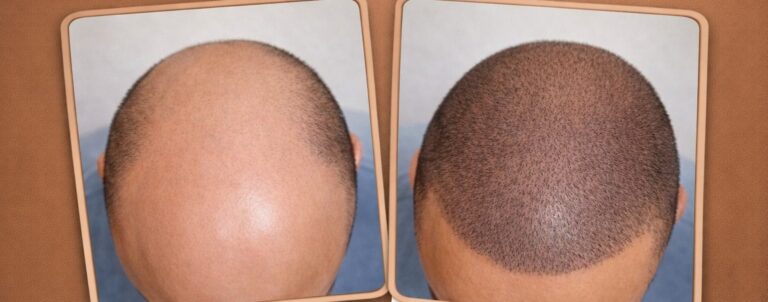
    Hair transplant Turkey before and after result 3Before and after hair transplant in Turkey: receding hairline with donor area marked, restored to a natural frontal hairline, performed by Dr. Merdan Celik, MD at Global Health Hair, IstanbulBefore and after hair transplant in Turkey: crown baldness restored to full density, top-down view, performed by Dr. Merdan Celik, MD at Global Health Hair, IstanbulBefore and after hair transplant in Turkey: thinning frontal hairline rebuilt with natural density, performed by Dr. Merdan Celik, MD at Global Health Hair, Istanbul

    See more real patient results →

    What Is Our Istanbul Clinic Like?

    Global Health Hair is located in the heart of Şişli, Istanbul – modern, clean, and designed for a calm, private patient experience from arrival to recovery.

    Global Health Hair clinic in Istanbul 1Global Health Hair clinic in Istanbul 2Global Health Hair clinic in Istanbul 3

    Where Will You Stay in Istanbul?

    Your all-inclusive package includes a Premium Boutique Hotel in the Şişli district of Istanbul, at the same location as the clinic, with modern rooms, breakfast, and a 24/7 team. View clinic & hotel location on Google Maps.

    Premium Boutique Hotel included in your hair transplant Turkey package 1Premium Boutique Hotel included in your hair transplant Turkey package 2Premium Boutique Hotel included in your hair transplant Turkey package 3Premium Boutique Hotel included in your hair transplant Turkey package 4

    Frequently Asked Questions

    Do UK nationals need a visa to travel to Turkey for a hair transplant?

    Currently, UK citizens can enter Turkey visa-free for stays of up to 90 days within a 180-day period. This is sufficient for any hair transplant trip. Always verify the current visa requirements via the official UK government travel advice page (gov.uk/foreign-travel-advice/turkey) before travel, as policies can change.

    What if I have a problem after returning to the UK — can my GP help?

    Your UK GP can assess any post-operative concerns and refer you to a dermatologist if needed. However, the most common post-operative questions — redness, scabbing patterns, when to resume exercise — can be handled by your Turkish clinic remotely. A reputable clinic will have a named contact for post-operative queries and should respond within 24 hours. Establish this contact before you leave Istanbul.

    How soon after the procedure can I fly home?

    Most patients fly home on Day 2, following the post-operative check and first wash at the clinic. Flying on Day 1 (the same day as the procedure) is not recommended. The flight itself does not damage grafts — the risk period for graft dislodgement is largely limited to the first 48–72 hours, during which you are still in Istanbul. Wear a loose, wide-brimmed hat and avoid overhead baggage bins that might require you to reach above your head.


    Related reading: Payment guide · Best time to travel · Real results

    Travelling from Ireland? We have a separate guide for Irish patients, covering the non-stop Dublin–Istanbul flight, euro pricing and EHIC.

  • Hair Transplant Turkey Reviews: Real UK Patient Experiences

    Global Health Hair Reviews and Prices — The Short Version

    If you searched for reviews of Global Health Hair specifically, here is the verifiable summary. We hold a 4.6 rating from 129 Google reviews, which you can read directly on our public Google Business Profile, and further reviews on Trustpilot — both platforms we cannot edit.

    Our published prices are from €1,990 for FUE Sapphire and from €2,175 for DHI, all-inclusive; beard transplants follow the same pricing, and eyebrow transplants (Long FUE) start from €2,590, quoted individually. If a third-party page quotes different figures for us, ours are the current published ones — the quote you receive in writing before travelling is the total you pay.

    Every procedure is performed personally by Dr. Merdan Çelik, MD (Turkish state medical register no. 88616) — not by technicians. He holds no specialist board diploma and is not an ISHRS member; he attended the ISHRS FUE Hands-On Cadaver & Live Surgery Workshop (2019). We would rather you read that here than find an inflated version elsewhere.

    Hair Transplant Turkey Reviews: How to Tell the Genuine From the Manufactured

    Quick answer: Genuine hair transplant Turkey reviews come from independent, verifiable platforms — not the clinic’s own website — and name the treating surgeon. At Global Health Hair, every patient is treated personally by Dr. Merdan Çelik, MD (22+ years’ experience, 20,000+ patients treated), with real patient feedback verified on Trustpilot.

    Choosing a hair transplant clinic abroad is one of the most personal decisions you can make. Before booking a flight or committing a penny, most UK patients do the same thing: they read reviews. But how do you separate genuine experiences from marketing copy? And what should you actually look for once you find them?

    This guide walks you through how to evaluate hair transplant Turkey reviews properly — and shows you exactly where our own reviews can be checked, including what you cannot verify about us yet.

    Why Do Reviews Matter More for a Turkey Clinic Than a Local One?

    When you visit a UK clinic, you can walk in, meet the surgeon, and ask questions face to face before committing. With a clinic abroad, you’re making a significant decision with less in-person access — which makes genuine patient reviews absolutely essential.

    Reviews serve two purposes: they confirm the clinical quality of results, and they tell you what the experience actually felt like — from the airport transfer to the follow-up call three months later.

    What Should You Look For in Hair Transplant Turkey Reviews?

    1. Is a qualified MD surgeon performing the procedure?

    This is the single most important question. In Turkey, regulations vary, and some clinics allow technicians — not surgeons — to perform the extraction and implantation. A genuine review from a genuine patient will often mention whether they met the doctor, whether the doctor performed the procedure personally, and whether the doctor explained the plan.

    At Global Health Hair, every procedure is performed by Dr. Merdan Çelik MD, a fully qualified medical doctor with over 22 years of specialised experience and more than 20,000 patients treated. He attended the ISHRS FUE Hands-On Cadaver & Live Surgery Workshop (2019), part of the field’s main professional society. Note that the ISHRS is a membership body, not a certifying one: it does not accredit clinics, so treat any clinic advertising itself as “ISHRS-certified” with caution.

    2. Are before-and-after photos authentic?

    Stock images and manipulated photographs are a known issue in this industry. Look for reviews that include timestamped or independently verified before-and-after photos. Even better: find photos posted directly by patients on forums, Reddit threads, or review platforms — not just those curated by the clinic itself.

    3. Are the reviews verified on independent platforms?

    Clinic websites can publish any testimonial they choose. What carries genuine weight is a verified review on an independent platform — one where the reviewer’s identity is confirmed and the review cannot be edited by the business. You can see our Trustpilot profile, which is registered under our Spanish-market brand.

    4. Does the reviewer describe the full timeline?

    Hair transplant results take time. A trustworthy review acknowledges the shock loss phase (months 1–3), the gradual regrowth phase (months 3–6), and the final density assessment (months 9–12). If a review only describes the day of surgery, it tells you very little about whether the procedure actually worked.

    Where Can You Check Our Own Reviews?

    Apply the same test to us that we have just described. Here is exactly what you will find, including the awkward part.

    • Google: our clinic profile carries our real patient reviews, with a 4.6 average. Read them yourself rather than taking our word for it.
    • They are in Spanish and Catalan, not English. Dr. Çelik has treated over 20,000 patients, but our English-language service opened recently, so the written reviews we have come from patients who found us through our Spanish-language clinic. We publish them translated and attributed rather than rewriting them under British names.
    • Trustpilot: our reviews there sit under our Spanish-market brand, which is why the page is in Spanish.
    • What you cannot verify about us yet: there is no long trail of British patient reviews, because there have not yet been many British patients. Any clinic of our age claiming otherwise is worth a second look.

    What you can verify independently is the surgeon. Dr. Merdan Çelik’s medical licence is on the Turkish state register, and our step-by-step verification guide shows you how to check it — for us or for any other clinic you are considering.

    What Are the Red Flags to Watch Out For in Turkey Clinic Reviews?

    • Reviews that all use identical language or very generic phrases
    • No mention of the surgeon’s name or qualifications
    • Before-and-after photos with unusual lighting differences between images
    • Clinics with hundreds of reviews but zero negative or mixed feedback
    • No independent third-party verification platform linked

    Real Hair Transplant Results

    Genuine before & after photos from patients treated by Dr. Çelik at Global Health Hair.
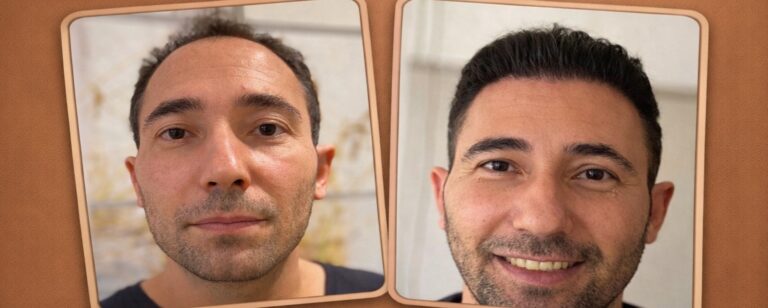
    Hair transplant Turkey before and after result 3Before and after hair transplant in Turkey: receding hairline with donor area marked, restored to a natural frontal hairline, performed by Dr. Merdan Celik, MD at Global Health Hair, IstanbulBefore and after hair transplant in Turkey: crown baldness restored to full density, top-down view, performed by Dr. Merdan Celik, MD at Global Health Hair, IstanbulBefore and after hair transplant in Turkey: thinning frontal hairline rebuilt with natural density, performed by Dr. Merdan Celik, MD at Global Health Hair, Istanbul

    See more real patient results →

    ⭐ 4.6 on Google Reviews (129 reviews)

    What Is Our Istanbul Clinic Like?

    Global Health Hair is located in the heart of Şişli, Istanbul – modern, clean, and designed for a calm, private patient experience Reviews tell you about the clinic; for the practical side of the city, see our guide to hair transplants in Istanbul.

    Global Health Hair clinic in Istanbul 1Global Health Hair clinic in Istanbul 2Global Health Hair clinic in Istanbul 3

    Where Will You Stay in Istanbul?

    Your all-inclusive package includes a Premium Boutique Hotel in the Şişli district of Istanbul, at the same location as the clinic, with modern rooms, breakfast, and a 24/7 team. View clinic & hotel location on Google Maps.

    Premium Boutique Hotel included in your hair transplant Turkey package 1Premium Boutique Hotel included in your hair transplant Turkey package 2Premium Boutique Hotel included in your hair transplant Turkey package 3Premium Boutique Hotel included in your hair transplant Turkey package 4

    Frequently Asked Questions

    How do I know if hair transplant Turkey reviews are genuine?

    Check for reviews on independent platforms such as Trustpilot, where reviewer identities are verified and the business cannot remove or edit responses. Also look for patient stories on hair loss forums and subreddits — these are unmoderated and often more candid.

    Do UK patients typically have good experiences with Turkey hair transplant clinics?

    Outcomes vary significantly by clinic. UK patients who research thoroughly — verifying the surgeon’s medical registration, confirming in writing who performs the surgery, and reading independent reviews — consistently report positive experiences. Those who choose purely on price without checking credentials are more at risk of substandard results.

    What certifications should I look for in a Turkey hair transplant surgeon?

    Look for a fully qualified MD (Doctor of Medicine), registered on the national medical register of the country where he or she operates — in Turkey that is a registration number you can ask for and check. Then ask, in writing, who will make the incisions and place the grafts: the doctor, or technicians. That single answer tells you more than any society membership, because membership is not a licence to operate and is not required to practise.

    Related reading: Real patient results · Meet Dr. Çelik, MD

  • Is Hair Transplant Turkey Safe? A Surgeon’s Honest Answer

    Quick summary: Yes — when a licensed doctor performs the surgery. The real safety variable in Turkey is not the country, it is who holds the instruments: at many high-volume clinics the procedure is carried out by technicians, and graft survival depends directly on extraction angle, depth and handling. At Global Health Hair every procedure is performed personally by Dr. Merdan Çelik, MD (licensed physician, Trakya University 1997; 22+ years; 20,000+ patients treated). A procedure costing £8,000–£15,000 at a reputable London clinic is performed to equivalent medical standards in Turkey for €1,990 all-inclusive (DHI from €2,175). Graft survival depends heavily on the first 10–14 days of aftercare.

    Is Hair Transplant in Turkey Safe? A Medical Guide for UK Patients

    One risk that gets less attention than infection or scarring: some prescribed medicines cause hair shedding of their own, and stopping one to qualify for surgery is its own danger. We set out what to tell your surgeon about your medication before booking — and why a clinic that tells you to stop a prescription is a warning sign.

    Yes — a hair transplant in Turkey is safe when performed by a licensed medical doctor, not a technician. Dr. Merdan Çelik, MD, with 20,000+ patients treated over 22+ years, performs every operation himself. The real risk is clinics that delegate surgery to unsupervised technicians to cut costs.

    Turkey performs more hair transplants than any other country in the world — with industry estimates putting its annual volume in the hundreds of thousands of procedures. Most patients leave with excellent results; a minority do not, and the difference almost always comes down to one thing: whether a qualified medical doctor led the procedure. This guide explains exactly what “safety” means when choosing a clinic in Turkey.

    Why Do So Many People Choose Turkey for a Hair Transplant?

    Turkey’s dominance in the field is not a marketing accident. The country has built a genuine concentration of experienced hair restoration surgeons, trained in internationally recognised medical schools, over the past two decades. Istanbul in particular functions as a global centre of expertise — comparable to what Miami is for cosmetic surgery or what Houston is for cardiology.

    That concentration of talent sits alongside a cost structure that is dramatically lower than the UK, largely due to lower overheads, labour costs, and the exchange rate advantage. The result: a procedure costing £8,000–£15,000 at a reputable London clinic can be performed to equivalent medical standards in Turkey for €1,990 all-inclusive (DHI from €2,175).

    The problem is that high demand has attracted clinics whose primary qualification is marketing, not medicine.

    Is It Safe If a Technician (Not a Doctor) Performs the Transplant?

    This is the single most important safety question to ask any Turkish clinic: Will a licensed medical doctor perform my transplant, or will it be delegated to technicians?

    Turkish law requires that hair transplants be performed by physicians. In practice, this regulation is inconsistently enforced. A 2019 ISHRS task force found that a significant proportion of clinics operating in Turkey were using non-physician technicians to extract and implant grafts, with a doctor present only briefly or not at all.

    This matters for several reasons:

    • Graft survival rate — Precise extraction angle, depth, and handling technique directly affect how many transplanted follicles survive. An experienced surgeon achieves consistently higher graft survival than an undertrained technician.
    • Hairline design — Creating a natural-looking hairline requires aesthetic judgement, anatomical knowledge, and surgical experience. It cannot be delegated safely.
    • Complication management — Should anything go wrong during the procedure, only a licensed physician can respond appropriately. Technicians cannot.

    At Global Health Hair, every procedure is led by Dr. Merdan Çelik, MD, a physician who graduated from Trakya University Faculty of Medicine in 1997 and has since treated more than 20,000 patients across more than 22 years. He attended the ISHRS FUE Hands-On Cadaver & Live Surgery Workshop (2019) — he is not an ISHRS member. His involvement is not supervisory; he leads each operation personally.

    How Do You Identify a Legitimate Hair Transplant Clinic in Turkey?

    1. Verify ISHRS Membership

    The International Society of Hair Restoration Surgery maintains a public directory of member physicians. Membership requires verified medical qualifications and ongoing professional education. Search for your proposed surgeon before booking.

    2. Ask for the Surgeon’s Medical Degree

    Ask directly: “What is your surgeon’s name, their medical degree, and their university?” A reputable clinic will answer immediately and transparently. Vague answers about “our experienced team” are a warning sign.

    3. Request Before-and-After Photos — With Matching Norwood Grades

    Any clinic can publish its best results. Ask for results that match your current hair loss pattern (Norwood grade). If the clinic cannot provide relevant comparisons, move on.

    4. Assess the Consultation Process

    A responsible clinic will conduct a proper hair analysis — assessing donor density, scalp laxity, hair calibre, and Norwood classification — before quoting a graft number. If a clinic quotes you a graft number and price within minutes of a brief WhatsApp message, without a proper assessment, that is a red flag.

    5. Understand the Aftercare Protocol

    Graft survival depends heavily on the first 10–14 days post-procedure. A legitimate clinic provides a detailed written aftercare protocol, a direct contact for follow-up questions, and clear instructions for what to do if complications arise.

    What Are the Red Flags to Avoid When Choosing a Clinic in Turkey?

    • Prices advertised as “unlimited grafts” — graft count has clinical limits; no ethical surgeon offers unlimited grafts
    • Packages where you cannot confirm the name or credentials of your operating surgeon in advance
    • Clinics that use WhatsApp to confirm your booking without any form of medical assessment
    • Before-and-after photos with watermarks but no patient testimonials or verifiable case histories
    • Aggressive upselling of PRP, laser therapy, or other add-ons during initial contact
    • No written contract specifying the technique, graft count, surgeon name, and what is included

    What About Regulation?

    Turkey’s Ministry of Health does regulate medical tourism and hair transplant clinics. Clinics operating legally must hold a valid licence, and surgeons must be registered physicians. The challenge is that regulation and enforcement are not uniform across all regions. Istanbul’s major clinics operating in accredited facilities are generally well-regulated. Budget operations in back-street premises are less so.

    For UK patients, the practical safeguard is independent verification: the surgeon’s state medical registration number, a written answer on who performs the incisions and the implantation, and reading reviews on independent platforms (Trustpilot, RealSelf, Google) rather than testimonials on clinic websites.

    So, Is a Hair Transplant in Turkey Safe? The Bottom Line

    Hair transplant in Turkey is safe when performed by a qualified medical doctor in a properly equipped facility. It carries material risk when performed by undertrained technicians in clinics that prioritise volume over quality. The price difference between these two categories is often surprisingly small — the difference lies in how the clinic is structured and who is actually holding the instruments.

    If you are considering a hair transplant in Turkey, make doctor credentials your first and non-negotiable filter. Everything else — price, location, package inclusions — is secondary.

    You can speak directly with Dr. Çelik’s team for a no-obligation assessment of your hair loss and a clear picture of what results are realistic for your case.

    Free Consultation with Dr. Çelik, MD
    Get an honest medical assessment of your hair loss — graft count, technique recommendation, and realistic outcome — from a surgeon with 22+ years and 20,000+ patients.

    Message us on WhatsApp →

    Real Hair Transplant Results

    Genuine before & after photos from patients treated by Dr. Çelik at Global Health Hair.

    Hair transplant Turkey before and after result 3Before and after hair transplant in Turkey: receding hairline with donor area marked, restored to a natural frontal hairline, performed by Dr. Merdan Celik, MD at Global Health Hair, IstanbulBefore and after hair transplant in Turkey: crown baldness restored to full density, top-down view, performed by Dr. Merdan Celik, MD at Global Health Hair, IstanbulBefore and after hair transplant in Turkey: thinning frontal hairline rebuilt with natural density, performed by Dr. Merdan Celik, MD at Global Health Hair, Istanbul

    See more real patient results →

    ⭐ 4.6 on Google Reviews (129 reviews)

    What Is Our Istanbul Clinic Like?

    Global Health Hair is located in the heart of Şişli, Istanbul – modern, clean, and designed for a calm, private patient experience from arrival to recovery.

    Global Health Hair clinic in Istanbul 1Global Health Hair clinic in Istanbul 2Global Health Hair clinic in Istanbul 3

    Where Will You Stay in Istanbul?

    Your all-inclusive package includes a Premium Boutique Hotel in the Şişli district of Istanbul, at the same location as the clinic, with modern rooms, breakfast, and a 24/7 team. View clinic & hotel location on Google Maps.

    Premium Boutique Hotel included in your hair transplant Turkey package 1Premium Boutique Hotel included in your hair transplant Turkey package 2Premium Boutique Hotel included in your hair transplant Turkey package 3Premium Boutique Hotel included in your hair transplant Turkey package 4

    Frequently Asked Questions

    Is it legal to have a hair transplant in Turkey as a UK citizen?

    Yes, entirely. There are no legal restrictions on UK citizens travelling to Turkey for medical procedures. Turkey is a popular medical tourism destination and its major clinics regularly treat patients from the UK, Europe, and the United States. You simply travel as a tourist and receive treatment as a private patient.

    What happens if something goes wrong after I return to the UK?

    A reputable Turkish clinic will provide ongoing remote support — typically via WhatsApp or email — for follow-up questions after your return. For anything requiring in-person assessment, your UK GP can refer you to a dermatologist. It is worth noting that serious complications from hair transplants performed by qualified surgeons are rare; the most common issues (temporary shock loss, minor scarring) are manageable and time-limited.

    How do I know if a Turkish clinic is ISHRS-accredited?

    ISHRS does not accredit clinics — it is a membership society, not a certifying body. It admits physicians at several membership tiers, and the tier decides what a patient can see. Only Full and Fellow Members appear in the public directory at ishrs.org/find-a-doctor; Associate Members are not included in that directory, so a doctor missing from it may still hold Associate membership. Always search by the individual doctor’s name, not the clinic name, and check which tier applies before assuming a doctor is unlisted.

    We set out the whole picture — which Turkish registers exist, which ones a patient abroad can actually open, and what to ask a clinic when the public route does not exist — in how to verify a Turkish hair transplant surgeon, including our own surgeon’s credentials with their limits stated.

    Related reading: Doctor vs technician · Meet Dr. Çelik, MD · Cost & packages · Real results

  • Turkey vs UK Hair Transplant: The Full Cost Comparison

    Hair Transplant Turkey vs UK: Full Cost & Quality Comparison

    Quick answer: A hair transplant in Turkey costs from €1,990 all-inclusive at Global Health Hair (DHI €2,175) versus £5,000–£15,000 in the UK — 60–80% less — while delivering comparable clinical results at an MD-led clinic. Global Health Hair is led personally by Dr. Merdan Çelik, MD, who has treated more than 20,000 patients with FUE and DHI over 22+ years.

    If you are researching hair transplants and based in the UK, you have almost certainly noticed the price gap between domestic clinics and Turkish providers. The difference can be startling: a procedure costing £10,000 in London may be available in Istanbul for under €2,500. The natural question is whether that price difference reflects a quality difference — and if so, how large a quality difference you are accepting.

    This comparison is designed to give you an honest, detailed answer — not a promotional argument for either country.

    How Much Does a Hair Transplant Cost in Turkey vs the UK?

    UK Hair Transplant Prices

    In the United Kingdom, FUE hair transplants at reputable clinics typically range from £5,000 to £15,000, depending on graft count, clinic location, and surgeon seniority. London clinics command the highest prices. Regional clinics in Manchester, Birmingham, or Edinburgh may be slightly lower.

    The majority of UK hair transplant clinics do not include all-day surgeon involvement in this price — procedures are frequently performed by technicians under a supervising physician who may see you briefly at the start and end of the session.

    Turkey Hair Transplant Prices

    In Turkey, all-inclusive FUE packages at medically led clinics start at approximately €1,990, with DHI packages from around €2,175. These prices typically include the procedure itself, pre-operative blood tests, medications, post-operative care kit, accommodation, and airport transfers.

    Budget operations in Turkey can advertise lower prices — sometimes €800–€1,200 — but these frequently involve technician-led procedures and carry meaningfully higher risk.

    How Do Turkey and UK Hair Transplants Compare Side by Side?

    Factor UK (Reputable Clinic) Turkey — Technician Clinic Turkey — MD-Led Clinic (e.g. GHH)
    Typical FUE cost £5,000–£15,000 €800–€1,500 €1,990 fixed (DHI €2,175)
    Surgeon leads procedure Usually yes (varies) Rarely Yes — Dr. Çelik, MD
    Accommodation included No Often Yes
    Aftercare protocol Varies Minimal Written protocol + remote support
    Language English Variable English-speaking team
    Travel required No Yes (~3.5h flight) Yes (~3.5h flight)
    Total trip cost (incl. flights) £5,000–£15,000 €1,000–€1,800 €2,200–€4,000
    Medical tourism legal framework NHS and CQC-regulated Turkish MoH regulated (variable enforcement) Turkish MoH regulated (licensed facility)

    What Does the Evidence Show About Quality in Turkey vs the UK?

    The assumption that UK procedures are uniformly higher quality than Turkish ones does not hold up to scrutiny. Several factors explain why:

    Surgeon Experience Concentration

    Istanbul’s leading hair transplant surgeons have performed far more procedures than most UK practitioners simply because of volume. A surgeon who has performed 20,000 transplants has a level of repetition-based skill that is difficult to match in a lower-volume UK practice. Volume alone does not guarantee quality — but experienced hands matter enormously in a technique-sensitive procedure.

    Technology and Equipment

    The FUE punch tools, DHI implanter pens, and microscopic graft handling techniques available in Istanbul’s better clinics are identical to those used in London, Paris, or New York. The equipment is not a differentiator at the top end of the market.

    The Technician Problem Applies in Both Countries

    Technician-led procedures exist in the UK as well as Turkey. CQC regulation in England requires a surgeon to be present and responsible, but the degree of hands-on surgeon involvement varies considerably between clinics. The question “will my surgeon personally extract and implant my grafts?” is worth asking in Manchester as much as in Istanbul.

    What Advantages Does a UK Clinic Offer That Turkey Cannot Match?

    There are genuine advantages to choosing a UK clinic that should be weighed honestly:

    • No travel — You do not have to fly internationally for follow-up appointments
    • Easier communication — No language risk, same time zone, direct access if problems arise
    • CQC oversight — English clinics are subject to Care Quality Commission inspection, which provides an independent quality check
    • Consumer protection — UK consumer law provides clearer redress if outcomes are disputed

    These are meaningful considerations, particularly for patients with complex cases or significant medical comorbidities.

    Turkey or the UK: Which Should You Choose?

    For the majority of straightforward hair transplant cases — Norwood grades 2–5, healthy donor area, no significant complicating factors — a Turkey-based procedure at a medically led clinic whose surgeon is a licensed physician delivers equivalent clinical outcomes to a UK procedure at a fraction of the cost. The saving is typically £4,000–£10,000.

    The qualifier is important: medically led, by a licensed physician. The risk in Turkey is not the country; it is the segment of the market that offers very low prices via technician-led production-line operations. Choosing within the right segment of the Turkish market is a straightforward screening exercise — but it requires doing the screening.

    Learn more about FUE hair transplant at Global Health Hair or DHI hair transplant options.

    Compare Your Options with a Free Consultation
    Dr. Çelik’s team will assess your hair loss, confirm how many grafts you need, and give you a transparent quote — no obligation, no pressure.

    WhatsApp Dr. Çelik’s team →

    Real Hair Transplant Results

    Genuine before & after photos from patients treated by Dr. Çelik at Global Health Hair.

    Hair transplant Turkey before and after result 3Before and after hair transplant in Turkey: receding hairline with donor area marked, restored to a natural frontal hairline, performed by Dr. Merdan Celik, MD at Global Health Hair, IstanbulBefore and after hair transplant in Turkey: crown baldness restored to full density, top-down view, performed by Dr. Merdan Celik, MD at Global Health Hair, IstanbulBefore and after hair transplant in Turkey: thinning frontal hairline rebuilt with natural density, performed by Dr. Merdan Celik, MD at Global Health Hair, Istanbul

    See more real patient results →

    ⭐ 4.6 on Google Reviews (129 reviews)

    What Is Our Istanbul Clinic Like?

    Global Health Hair is located in the heart of Şişli, Istanbul – modern, clean, and designed for a calm, private patient experience from arrival to recovery.

    Global Health Hair clinic in Istanbul 1Global Health Hair clinic in Istanbul 2Global Health Hair clinic in Istanbul 3

    Where Will You Stay in Istanbul?

    Your all-inclusive package includes a Premium Boutique Hotel in the Şişli district of Istanbul, at the same location as the clinic, with modern rooms, breakfast, and a 24/7 team. View clinic & hotel location on Google Maps.

    Premium Boutique Hotel included in your hair transplant Turkey package 1Premium Boutique Hotel included in your hair transplant Turkey package 2Premium Boutique Hotel included in your hair transplant Turkey package 3Premium Boutique Hotel included in your hair transplant Turkey package 4

    Frequently Asked Questions

    Is the quality of hair transplants in Turkey genuinely comparable to the UK?

    At medically led clinics where a licensed physician performs the surgery, yes — clinical outcomes are comparable. The technique (FUE or DHI), instruments, and graft handling protocols are the same. The difference is cost structure, not medical capability. The risk lies in low-budget, technician-led operations, which exist in Turkey but not at the same scale in the UK.

    What happens if I have a complication after returning from Turkey?

    Most reputable Turkish clinics provide ongoing remote support via WhatsApp or email after you return. For anything requiring in-person review, you can see your UK GP, who can refer to a dermatologist if needed. It is worth confirming the clinic’s aftercare protocol before booking — a responsible clinic will have a clear answer.

    Should I choose a UK clinic if my case is complex?

    If your case involves significant medical complexity — for example, a hair loss pattern caused by an underlying medical condition, extensive scarring from prior procedures, or severe miniaturisation — then a thorough in-person consultation before proceeding is essential. A UK-based surgeon may be preferable for ongoing access in those circumstances. For standard androgenetic alopecia cases, complexity is rarely a deciding factor.

    Related reading: Cost & packages · Is it safe? · Real results

    For the current year’s figures broken down by clinic category, see our hair transplant cost guide for Turkey.