Turkey Hair Transplant Results — Before & After
Turkey hair transplant results are typically visible from month 3–4, reach around 60% of final density by month 6, and are typically fully grown and natural in appearance by month 10–12. Dr. Merdan Çelik MD (20,000+ patients treated) performs the incisions, extraction and implantation himself, using Sapphire FUE or DHI. Transplanted hair typically grows for life and is indistinguishable from natural hair.
Prefer to hear it from patients first? Read our hair transplant Turkey reviews — verified experiences on Google and Trustpilot.
Every result shown on this page is a real patient of Dr. Merdan Çelik MD at Global Health Hair. Dr. Çelik has treated over 20,000 patients across 22+ years of practice.
Hair transplant outcomes vary depending on factors including the extent of hair loss, donor density, age, and general health. During your free consultation, Dr. Çelik will give you a realistic expectation based on your individual case.
Individual results vary. The photographs on this page show patients of Dr. Çelik at twelve months and are not a prediction of your own outcome. Graft survival, final density and healing depend on your donor area, your pattern of hair loss and how closely aftercare is followed. Dr. Çelik will tell you what is realistic for your case before you book.
What Do Real Hair Transplant Results in Turkey Look Like?
Every photograph below is of a Global Health Hair patient, published with their written consent. None are stock images and none are borrowed from other clinics — which is worth verifying on any clinic’s results page, including ours.
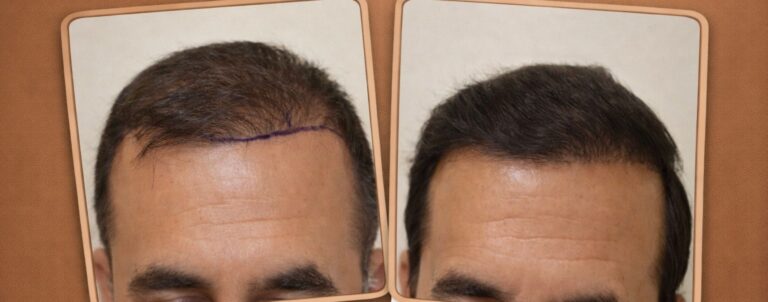
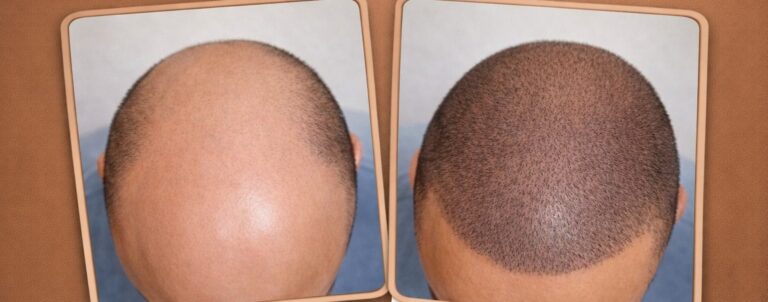
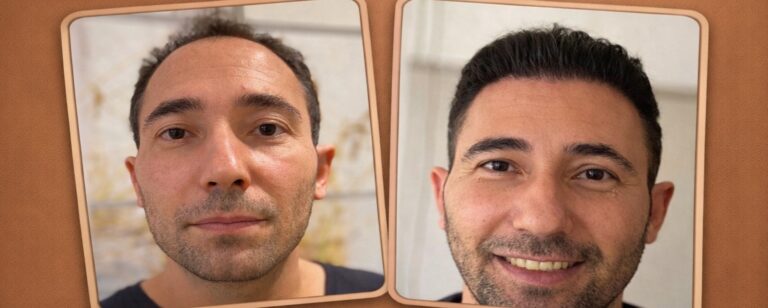
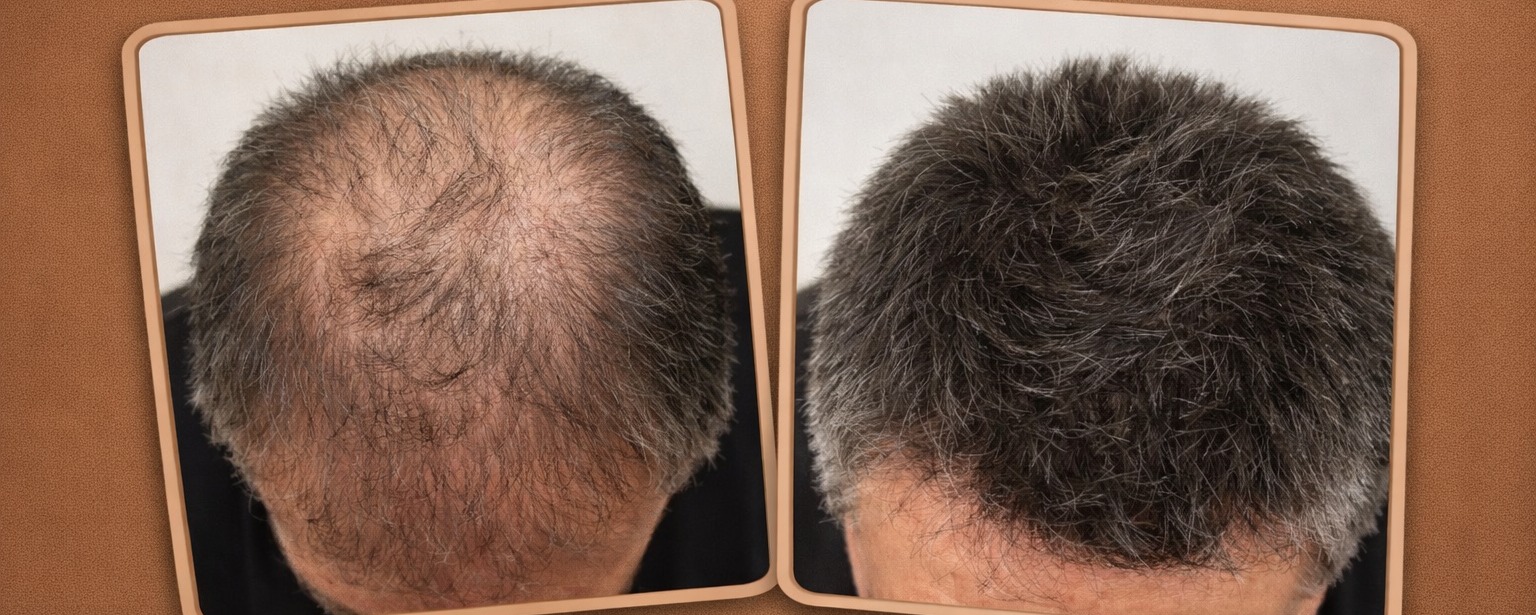
More results are added regularly. Read patient reviews on Trustpilot →
How Long Does It Take to See Hair Transplant Results in Turkey?
A hair transplant is not an overnight fix — it’s a gradual, natural process. Here’s what most patients experience after their procedure with Dr. Çelik:
- Days 1–10: Mild redness and scabbing around the transplanted grafts. This is normal and settles quickly.
- Month 1: Transplanted hairs shed. This is called shock loss and is completely normal — the follicles are not lost, just resting.
- Month 2–3: New regrowth begins to emerge. Fine, soft hair starts to appear from the transplanted follicles.
- Month 4–5: Hair thickens noticeably. Most patients begin to see visible improvement in density.
- Month 6: Approximately 60% of the final density is visible. This is a significant milestone — most patients are delighted at this stage.
- Month 9: Around 80–90% of the final result is visible. The hair continues to mature and thicken.
- Month 12: Final result. The transplanted hair is fully grown and natural in texture. This is when Dr. Çelik conducts the final follow-up assessment.
What Affects Your Hair Transplant Results in Turkey?
No two patients grow at exactly the same rate, but a handful of factors consistently make the biggest difference to the final outcome:
- Donor area quality. Thicker, denser donor hair gives the surgeon more flexibility to achieve natural-looking coverage.
- Surgeon experience and technique. Correct angle, direction and density of implantation — not just graft count — is what separates a natural result from an obviously transplanted look. This is where Dr. Çelik’s experience across 20,000+ patients makes a measurable difference.
- Following the aftercare protocol. Sleeping position, washing schedule and sun exposure in the first month directly affect graft survival rate.
- Patience during the shedding phase. Weeks 2 to 6 can look discouraging as transplanted hair sheds — this is completely normal and does not reflect the final result.
- Realistic timeline expectations. Results genuinely continue improving up to month 12 — judging density at month 4 or 5 rarely reflects the final outcome.
What Is Our Istanbul Location Like?
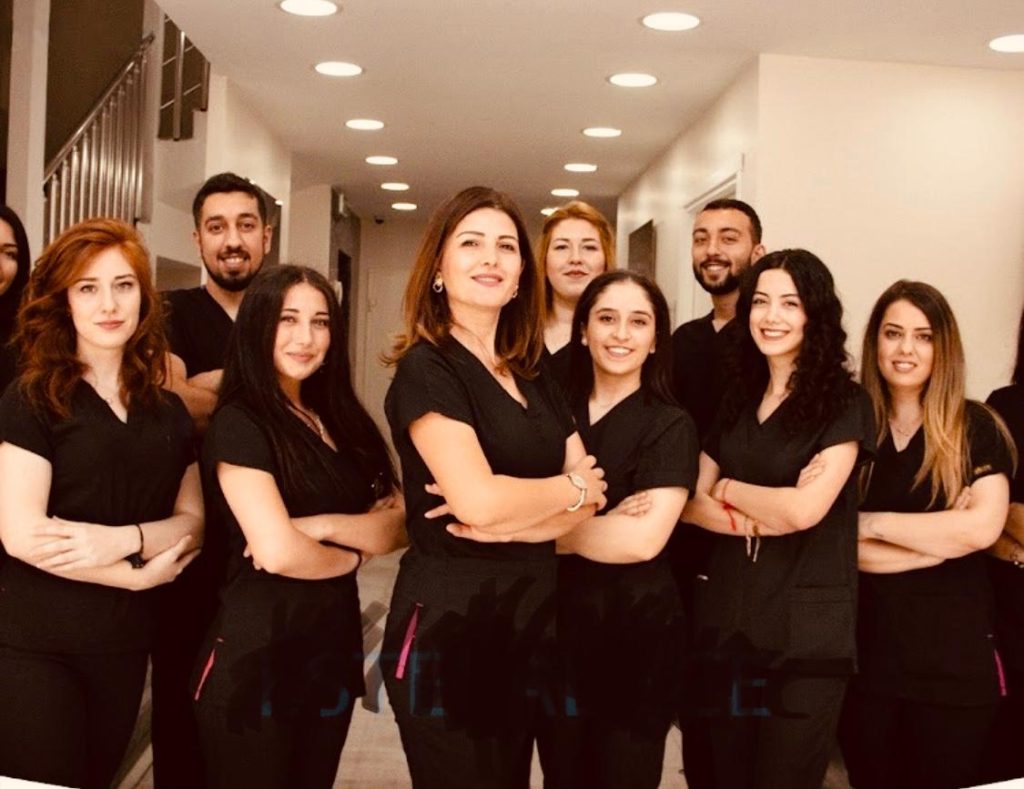
Global Health Hair is located in the heart of Şişli, Istanbul – modern, clean, and designed for a calm, private patient experience If you are still weighing the city itself, our guide to what a hair transplant in Istanbul actually involves walks through the trip, not just the surgery.

Where Will You Stay in Istanbul?
Your all-inclusive package includes a Premium Boutique Hotel in the Şişli district of Istanbul, with modern rooms, breakfast, and a 24/7 team..




What Do Our Patients Say About Their Hair Transplant Results?
Our written patient reviews are in Spanish and Catalan. They come from patients who reached Dr. Çelik through our Spanish-language clinic, and we publish them exactly as they were written, with a translation beside them — rather than reworking them into British names. Each one can be checked on our Google profile.
“Un trato excelente de principio a fin. El doctor te explica todo con calma y el resultado se nota desde los primeros meses.”
“Excellent care from start to finish. The doctor explains everything calmly and the result shows from the first months.”
— Manuel Echeverría Soto · Google review, translated from Spanish
“Muy contento con el resultado y con el seguimiento posterior. Repetiría sin dudarlo.”
“Very happy with the result and with the follow-up afterwards. I would do it again without hesitation.”
— Fran Izquierdo · Google review, translated from Spanish
Why you will not find British testimonials here yet. Our English-language clinic opened recently, so our reviews are still those of our Spanish-speaking patients. We would rather tell you that than publish reviews we cannot evidence — which is exactly what our guide to spotting fake clinic reviews tells you to look out for. You can read every review we have on our Google profile.
What Results Can You Expect by Graft Count?
Graft count is the single figure that most determines how much of your scalp a hair transplant can restore. It is not chosen from a menu: Dr. Çelik calculates it from your donor density, the area being treated and how far your hair loss has progressed. The bands below explain what each range realistically achieves.
What 2,000 to 2,500 Grafts Can Cover
This band typically restores a receding hairline and the temporal corners, corresponding to Norwood stage 2 or early stage 3. It rebuilds the frontal third of the scalp with natural density and suits patients reversing an early recession rather than rebuilding extensive loss. It is not usually enough to treat the crown in the same session.
What 3,000 to 3,500 Grafts Can Cover
This range covers the hairline and mid-scalp together, roughly Norwood stage 3 to 4, and produces a visibly fuller result across the front two-thirds of the head. Patients with a strong donor area can sometimes include partial crown coverage, though density is prioritised at the front, where the visual difference is greatest.
What 4,000 to 5,000 or More Grafts Can Cover
Reserved for advanced hair loss at Norwood stage 5 and above, where hairline, mid-scalp and crown all need restoration. Sessions of this size depend entirely on donor capacity, and not every patient has enough viable follicles to extract this many safely at once. Where donor supply is limited, Dr. Çelik recommends treating the frontal area first, because a dense hairline changes how you look far more than a partially covered crown.
How many grafts you actually need is confirmed at your free consultation, after your donor area has been assessed. Our hair transplant cost breakdown explains what each package includes.
What Looks Different in DHI (Choi Pen) Before & After Photos?
Results from DHI with the Choi implanter pen tend to show three things in before/after photos: a denser-packed hairline (the pen allows closer placement), no shaved-strip look in the donor area on unshaven cases, and earlier visible density at months 4–6 in the frontal zone. The 12-month endpoint is comparable to Sapphire FUE — the difference is placement control, not final count. Every DHI case at Global Health Hair is implanted personally by Dr. Merdan Çelik, MD.
How Do You Read a Before-and-After Photo Honestly?
Before-and-after photographs are the most persuasive thing a hair transplant clinic can show you, and also the easiest to manipulate. Before you judge any clinic on its results, including ours, here is what to check.
- Is the lighting the same in both photographs? Harsh overhead light exaggerates a thinning scalp; soft, even light conceals it. A fair comparison uses the same lighting in both images.
- Is the hair wet in the before photo and dry in the after? Wet hair clumps together and exposes the scalp. This one trick can make an unchanged head of hair look transformed.
- Is the camera at the same angle and distance? A before shot taken from above and an after taken at eye level are not comparable, however genuine both may be.
- Has the hair simply been cut and styled differently? A fresh cut, styling product and hair combed forward can create an impression of density that surgery did not deliver.
- How much time has passed? A result photographed at three or six months shows partial growth only. A hair transplant is not final until roughly twelve months.
- Is it recognisably the same person? Moles, scars, ear shape and hairline irregularities should match between the two images.
Our own standard. The photographs on this page are results of procedures performed by Dr. Çelik, shown at the twelve-month mark, when a hair transplant result is considered final. We publish a small and carefully documented selection rather than a large gallery, because a handful of results you can scrutinise tells you more than a hundred you cannot. At your free consultation we can show you further case studies matching your own pattern of hair loss.
Frequently Asked Questions About Hair Transplant Results in Turkey
When will I see the final results of my hair transplant?
Final hair transplant results are typically visible between 10 and 12 months after the procedure. Initial growth begins around months 3–4, with significant density improvements visible from month 6 onwards. Full maturation — including natural texture and thickness — takes up to 12 months.
Is it normal to lose the transplanted hair after the procedure?
Yes, shedding of the transplanted hair between weeks 2 and 6 is completely normal and expected. This is known as shock loss, or telogen effluvium. The hair follicles remain intact beneath the scalp and will re-enter their growth cycle, producing new, permanent hair from around month 3 onwards.
How many grafts do I need for a full result?
The number of grafts required depends on your degree of hair loss (measured using the Norwood Scale), your donor area density, and your desired coverage. A mild hairline recession may require 1,500–2,000 grafts, while advanced crown and frontal loss (Norwood 5–6) typically requires 3,500–5,000 grafts. Dr. Merdan Çelik, MD provides a personalised graft estimate during your free consultation.
Will my transplanted hair look completely natural?
Yes, when performed by an experienced MD using FUE Sapphire or DHI techniques, transplanted hair is indistinguishable from natural hair. The grafts are placed following the natural growth angle, direction, and density of your existing hair. With 20,000+ patients treated, Dr. Çelik’s results consistently achieve natural-looking density and hairline design.
Can I see real before-and-after photos from actual patients?
Yes. The photographs on this page are results of procedures performed by Dr. Çelik, shown at the 12-month mark, when a hair transplant result is considered final. We publish a small and carefully documented selection rather than a large gallery, because a handful of results you can scrutinise tells you more than a hundred you cannot. At your free consultation we can show you further case studies matching your own pattern of hair loss.
Are the results of a hair transplant permanent?
Yes. Hair follicles transplanted from the donor area (typically the back and sides of the scalp) are genetically resistant to DHT, the hormone responsible for pattern hair loss. Once successfully implanted and grown, these follicles produce permanent hair that will not fall out due to androgenic alopecia. Normal ageing and lifestyle factors can affect density over time.
What does the crown area look like after a hair transplant?
Crown transplants can achieve excellent coverage, but results are typically slower to appear than frontal transplants due to the circular hair growth pattern of the crown. A minimum of 12 months is needed to assess final crown density. Dr. Çelik may recommend a staged approach for advanced crown loss, prioritising frontal restoration first to ensure the most visible impact.
Will there be scarring after the procedure?
FUE Sapphire and DHI techniques leave only tiny, dot-like scars in the donor area that are virtually invisible once the surrounding hair regrows. Unlike the older FUT (strip) method, there is no linear scar. Most patients can wear their hair short without any visible scarring within 2–3 months of the procedure.
How soon can I return to work after a hair transplant?
Most patients return to desk-based or remote work within 3–5 days. If your work involves physical labour, heavy lifting, or direct sun exposure, a 2-week recovery period is recommended. The redness and scabbing visible in the recipient area typically resolves within 7–10 days.
What factors can affect my final hair transplant results?
Key factors include the quality and density of your donor area, your age and pattern of hair loss, adherence to the post-operative care protocol, lifestyle factors such as smoking and stress, and the surgeon’s technique and experience. Patients who follow the prescribed aftercare programme consistently achieve the best results.
How much scalp will 3,000 grafts cover?
Around 3,000 grafts typically covers the hairline and mid-scalp, roughly the front two-thirds of the head at Norwood stage 3 to 4. Coverage also depends on your hair calibre and on the contrast between your hair and your scalp: thick, dark hair on a lighter scalp reads as denser than fine hair, which needs more grafts to achieve the same visual result.
What is the success rate of a hair transplant?
In a well-performed procedure the large majority of transplanted follicles survive and produce hair permanently. Survival depends on how the grafts are extracted, how long they spend outside the body, and how carefully they are implanted, which is why who performs the critical stages matters more than the name of the technique. Dr. Çelik performs these stages personally rather than delegating them to technicians.
It has been six months and I still cannot see results. Is something wrong?
Usually not. At six months most patients have partial regrowth: the new hair is present but still fine and short, and has not yet gained the thickness that reads as density. Meaningful assessment begins at around nine months and the result is considered final at twelve. If you have seen no regrowth at all by month six, contact the clinic so your progress can be reviewed.
Can your body reject a hair transplant?
No. The grafts are your own follicles relocated from one part of your scalp to another, so there is no immune rejection as there would be with tissue from another person. Follicles can fail to survive if they are handled poorly during the procedure, but that is a technical failure, not rejection.
How many grafts can be transplanted in one session?
That is determined by your donor area, not by preference. Extracting more grafts than the donor region can spare permanently thins the back and sides, which is visible and irreversible. Dr. Çelik assesses donor density before agreeing any graft count and will recommend two sessions rather than over-harvesting a limited donor area.
Why do some hair transplants look unnatural?
Almost always because of hairline design rather than graft survival. A hairline placed too low, drawn as a straight line, or built with grafts implanted at the wrong angle looks artificial even when every follicle grows. A natural hairline is slightly irregular, follows the direction in which your original hair grew, and is positioned so that it still looks right in twenty years, once hair loss has progressed further.
Who is not a good candidate for a hair transplant?
Patients without sufficient donor density, those whose hair loss is still advancing rapidly and has not stabilised, and those with untreated scalp conditions or certain forms of hair loss such as active alopecia areata. Age by itself is not a disqualifier. An honest clinic will tell you when surgery is not the right answer, and being turned down is a sign of a surgeon protecting your outcome rather than selling a procedure.
Is 40 too old for a hair transplant?
No. Patients in their forties and fifties are often better candidates than much younger ones, because their pattern of loss has stabilised and it is easier to predict where hair will still be lost. What matters is donor supply and the stability of the loss, not your age.
Are You a Good Candidate for a Hair Transplant in Turkey?
Not everyone is at the right stage for a hair transplant — donor density, hair loss pattern, and age all play a role. The best way to find out is a free, no-obligation assessment from Dr. Çelik himself.
⭐ 4.6 on Google Reviews (130 reviews)
💬 Get Your Free Assessment on WhatsApp
Thinning at the crown? See why the crown takes more grafts, and FUE vs FUT for how the two methods differ.
Not sure whether the timing is right for you? Read how age affects a hair transplant.
Timing affects your recovery — see the best time of year for a hair transplant in Turkey.
Related reading: hair transplant Turkey vs UK · Dr. Merdan Çelik, MD — the surgeon who performs these procedures · how to pay for a hair transplant in Turkey · cost & packages · doctor vs technician: who performs your hair transplant · complete guide to hair transplant in Turkey · book a free assessment