Quick answer: A doctor (MD) is a licensed physician who is legally responsible for diagnosis, hairline design and performing the surgery; a technician is not medically qualified and, under Turkish law, may only assist. At Global Health Hair, Dr. Merdan Çelik MD personally performs the incisions, the extraction and the implantation in every procedure, leading his team.
Turkey has more than 700 registered hair transplant clinics. It is, by a considerable margin, the world’s largest market for the procedure — and for many international patients, it represents genuinely good value. But there is a fact that clinic marketing materials do not advertise: in the majority of those 700+ clinics, the person extracting and implanting your hair follicles is not a doctor. They are a trained technician. Understanding the difference between a surgeon-led procedure and a technician-led one may be the single most important decision you make in this process — more important than which city, which hotel, or which price bracket.
What Is a Hair Transplant Technician?
A hair transplant technician is not a medical doctor. They have not completed medical school, sat medical licensing examinations, or held a medical licence. In Turkey, technicians are typically trained over a period of weeks to months — sometimes directly by the clinic that employs them — in the practical mechanics of follicular extraction and implantation. They can become highly skilled at the physical task of handling grafts. The best technicians are precise, fast, and experienced in the manual aspects of the procedure.
Under Turkish law, technicians are permitted to assist a qualified surgeon. They are not legally permitted to perform the procedure independently. The distinction matters enormously — and so does the gap between what the law permits and what frequently happens in practice.
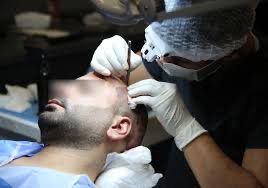
In many high-volume Turkish clinics, the workflow operates like this: a doctor conducts the initial consultation, reviews the patient’s hair, and may make the first incisions (the channel openings that determine graft placement). Then the doctor leaves the operating room. Technicians take over for the extraction phase — removing follicles from the donor zone — and the implantation phase — placing them in the recipient area. These are the stages that determine the final result: graft survival rate, natural hairline design, angle of implantation, and donor zone preservation.
This is not an accusation against any single clinic. It is an accurate description of standard operating practice across a significant proportion of the Turkish hair transplant industry.
Does Turkish Law Require a Doctor to Perform the Surgery?
Turkey’s medical regulations are clear on paper. They require that surgical procedures be performed and supervised by a licensed physician — specifically a Tıp Doktoru, the Turkish equivalent of an MD. A hair transplant is classified as a surgical procedure. Technicians may assist; they may not operate independently.
In practice, enforcement is inconsistent. Hair transplant tourism has grown so rapidly — the industry is estimated to generate over one billion US dollars annually — that regulatory oversight has struggled to keep pace with the sheer volume of clinics and procedures. “Supervision” in a busy multi-room clinic can mean a doctor is somewhere in the building. It does not always mean a doctor is in the operating room, watching, directing, and accountable for every graft.
This legal ambiguity is exploited systematically. Clinics can truthfully state that a doctor was involved in the procedure because a doctor performed the consultation and signed the paperwork. The patient has no way of knowing, after the fact, how much of the actual surgery was performed by that doctor and how much by technicians.
What Can Go Wrong with Technician-Only Clinics?
The consequences of an unsupervised or technician-led procedure are not always immediate. They manifest over 12 to 18 months, as the transplanted follicles either establish themselves and grow or fail to do so. By the time a patient recognises the outcome is poor, they are thousands of miles from the clinic, often with limited recourse.
Incorrect graft angle and direction. The natural growth direction of hair follicles varies across different areas of the scalp. In the hairline, follicles must be implanted at very low angles — often 15 to 20 degrees — to create a soft, natural appearance. Incorrect angles produce hair that grows outward rather than forward, creating a stiff, unnatural look that is immediately recognisable as a transplant. Correcting this requires a secondary procedure.
Over-harvesting from the donor zone. The donor zone — typically the back and sides of the scalp — has a finite reserve of follicles. Extraction must be distributed evenly to avoid visible thinning or scarring. An inexperienced technician, or one working under time pressure in a high-volume environment, may over-extract from a concentrated area, causing permanent visible depletion. This cannot be reversed.
Low graft survival rates. From the moment a follicle is extracted from the donor zone, it begins to deteriorate. The window between extraction and successful implantation is measured in hours. Experienced surgeons work efficiently and handle grafts with precision, maintaining humidity, temperature, and minimising trauma to the follicle. Rushed or less-skilled handling — common when multiple technicians are simultaneously processing large graft counts — reduces survival rates significantly. A procedure quoted as 4,000 grafts may effectively deliver the result of 2,500 surviving grafts.
Poorly designed hairlines. Hairline design is an aesthetic judgment that requires anatomical knowledge, an understanding of facial proportions, and experience with how hair transplants age over time. A hairline that looks acceptable at 30 may look inappropriate at 50 if designed without this longitudinal thinking. This is a surgical judgment, not a technical one.
How to Verify Your Surgeon Is a Qualified MD
We published a full, honest investigation of what a foreign patient can and cannot verify about any Turkish surgeon — including ours: how to verify a Turkish hair transplant surgeon.
Verification is straightforward once you know what to look for — and the fact that a clinic makes it difficult to verify is itself informative.
Verification tells you whether a surgeon is qualified. It does not tell you who is best — and no official ranking of Turkish surgeons exists, which is exactly why the “top clinic” lists you find online deserve a second look: how to judge the best hair transplant surgeon in Turkey without a ranking.
Look for the title “Tıp Doktoru” or “MD.” In Turkey, the title Tıp Doktoru is the legally recognised designation for a qualified medical doctor, awarded after completion of a six-year medical school programme. Any surgeon performing your procedure should be able to provide the name of the medical school they attended and their year of graduation. This is basic information that any legitimate doctor will share without hesitation.
Ask for the registration number — and know what you can do with it. Turkey keeps a state register of licensed doctors, the Doktor Bilgi Bankası, held by the Ministry of Health. It is consulted through the e-Devlet portal, which requires a Turkish national identity number, so a patient in Britain or Ireland cannot open it. The Turkish Medical Association does not fill that gap: its site carries a content search, not a register of doctors. Ask the clinic for the surgeon’s registration and diploma numbers anyway, and for copies of the documents themselves. If they cannot or will not provide them, treat that as a significant warning. Our step-by-step verification guide sets out exactly what a patient abroad can and cannot check.
Verify ISHRS membership independently — and know its limit. The International Society of Hair Restoration Surgery maintains a searchable public directory at ishrs.org/find-a-doctor, but it lists only Full and Fellow Members. There is no public list of Associate Members: ishrs.org/associate-members is a page explaining how to join, not a register, so an Associate-tier claim cannot be checked there or anywhere else public. If a clinic claims ISHRS membership, ask which tier, and treat a tier you cannot check as unverified. ISHRS headquarters will confirm a membership by email if you write to them — we have done exactly that about our own surgeon, and the answer corrected us.
Ask the direct question — and notice the answer. Ask the clinic explicitly: “Will the named surgeon personally perform my extraction and implantation, from start to finish?” A surgeon-led clinic will answer this without hesitation. A clinic that hedges, refers to “our surgical team”, or becomes evasive is telling you something important.
Dr. Merdan Çelik: A Surgeon-Led Practice
Dr. Merdan Çelik graduated from Trakya University Faculty of Medicine — one of Turkey’s established medical schools — and has dedicated his entire professional career to hair restoration surgery. Over 22 years of practice, he has treated more than 20,000 patients. That figure refers to patients treated by Dr. Çelik himself, not procedures completed by the clinic under his nominal supervision.
Dr. Çelik is not an ISHRS member; he attended the ISHRS FUE Hands-On Cadaver and Live Surgery Workshop in 2019 as a non-member registrant, which we state plainly rather than imply otherwise. Ask any clinic which tier their surgeon holds, and treat a vague answer as the warning sign. Associate Membership requires being a fully licensed physician (MD or equivalent) with a demonstrated interest in hair restoration and scalp surgery — it is not a marketing badge, and it is not self-reported; it is verified and maintained by ISHRS directly.
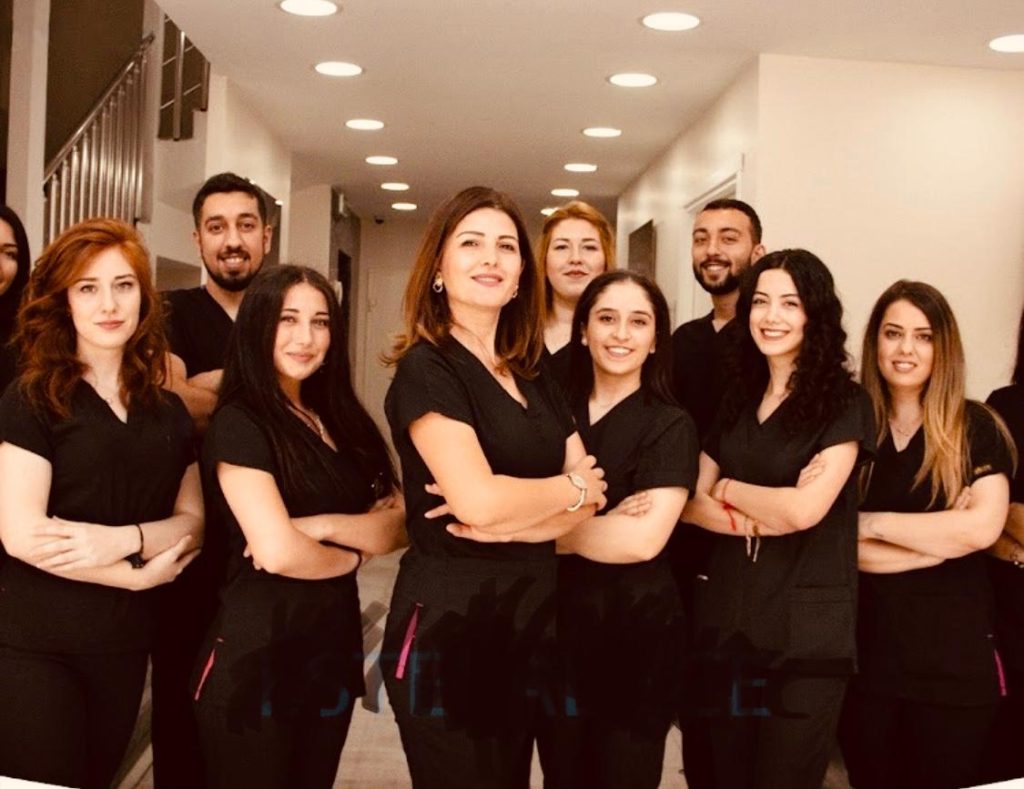
At Global Health Hair, the operating model is straightforward: Dr. Çelik is present in the operating room from the beginning of your procedure to the end. He performs the extraction of follicular units from your donor zone. He performs the implantation into the recipient area. His team assists with preparation, patient comfort, and the logistics of the procedure. The surgery itself is his work.
This is not the industry standard in Turkey. We state it explicitly because we believe patients deserve to know the difference — and because it is the reason our results are consistent across 20,000+ patients treated.
We have patients from across the United Kingdom, Ireland, and throughout Europe. Many of them came to us after unsatisfactory results from technician-led clinics elsewhere. Corrective procedures are among the most technically demanding work in hair restoration, and they are a common part of our practice — not because we performed the original procedure, but because we are often the clinic patients turn to when their first experience did not deliver what was promised.
One number worth knowing: a transplant led by Dr. Çelik, MD costs a fixed €1,990 all-inclusive — less than many technician-led packages once extras are added. Surgeon-performed does not mean more expensive. See exactly what is included.
What Business Practices Should Worry You, Beyond the Surgery Itself?
A poor surgical outcome is not the only risk. Across patient reviews and forums, the same commercial red flags come up again and again — worth checking with any clinic before you book, regardless of who performs the procedure:
- Extras added after you arrive. A quote that was “fixed” in writing suddenly grows once you are at the clinic — an added charge to extract grafts from the beard, or a “necessary” supplementary treatment. At Global Health Hair, the price you are quoted before you travel is the total price. Nothing is added on the day.
- The technique you paid for isn’t the one you receive. Some patients report booking and paying for DHI, then discovering during the procedure that FUE was performed instead. Your written treatment plan should name the exact technique, and the surgeon performing it should be named too.
- Aftercare support that quietens down after the invoice is paid. Recovery continues for 12 months after a hair transplant. If the clinic’s WhatsApp support becomes slow or unresponsive once you’re home, there is often no real structure behind the “aftercare included” promise. Our 12-month remote follow-up is with Dr. Çelik’s own team, not a call centre.
- Guarantees that turn out to be conditional. A “lifetime” or “20-year” guarantee sounds reassuring, but read what actually triggers it. Ours is a written Guarantee Certificate that every patient receives after the procedure. Some clinics’ guarantee terms exclude the exact outcomes patients complain about most. Ask, in writing, exactly what result qualifies for a free correction — before you book, not after.
None of this replaces medical due diligence — it complements it. A clinic can have a supervising doctor on paper and still fail on every point above. Ask about both.
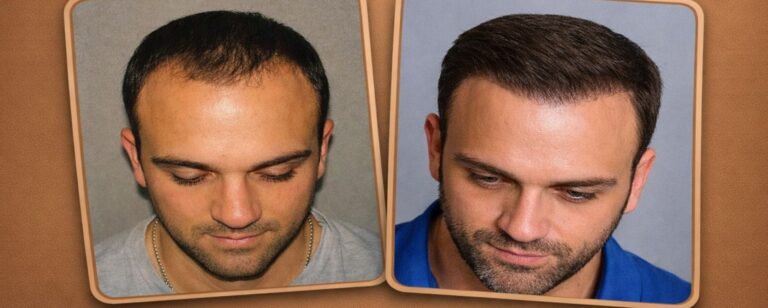
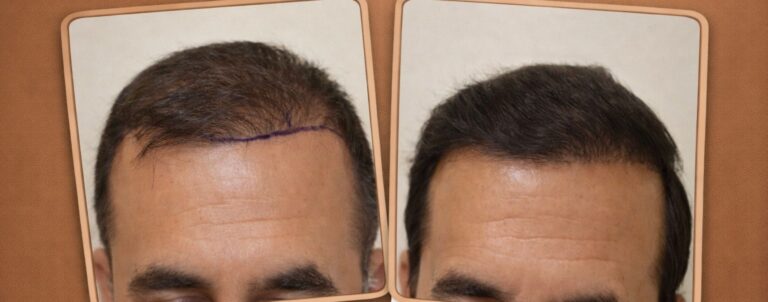
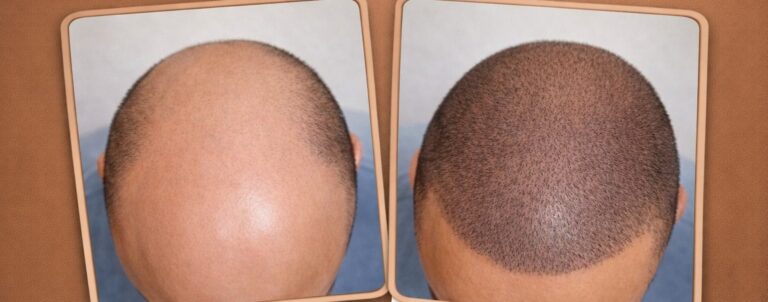
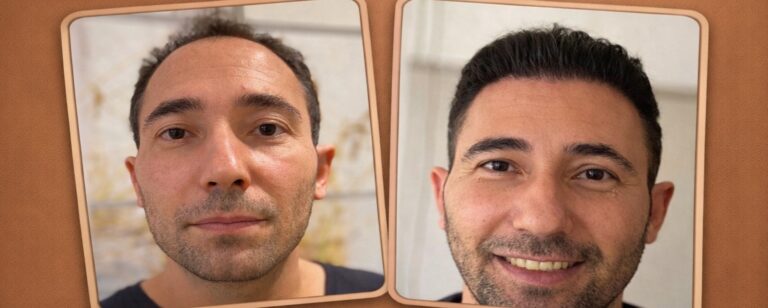
Real Hair Transplant Results
Genuine before & after photos from patients treated by Dr. Çelik at Global Health Hair.
See more real patient results →
⭐ 4.6 on Google Reviews (130 reviews)
What Is Our Istanbul Location Like?
Global Health Hair is located in the heart of Şişli, Istanbul – modern, clean, and designed for a calm, private patient experience from arrival to recovery.
Where Will You Stay in Istanbul?
Your all-inclusive package includes a Premium Boutique Hotel in the Şişli district of Istanbul, with modern rooms, breakfast, and a 24/7 team..
Speak Directly with Dr. Çelik’s Team
Not a sales team. Not a patient coordinator. A consultation with people who can answer clinical questions about your specific hair loss pattern, donor zone, and realistic outcome.
WhatsApp Dr. Çelik’s Team — Free Consultation
Responds within 2 hours · No commitment required · British English spoken