Free Checklist — Download & Print
20 Questions to Ask Your Turkey Hair Transplant Clinic Before You Book
Written by Dr. Merdan Çelik MD — Trakya University Faculty of Medicine · Attended ISHRS Workshop (2019) · 20,000+ patients treated
Why This Checklist Could Save Your Hair — and Your Money
Turkey is home to more than 700 hair transplant clinics. The country has become the world’s most popular destination for the procedure, and for good reason: costs are a fraction of what you would pay in the UK, and the best clinics genuinely deliver outstanding results. But here is the problem: the gap between the best and the worst clinics in Turkey is enormous — and it is not always visible from a website or an Instagram page.
In many Turkish clinics, the consultation is conducted by a doctor, but the actual surgical procedure — the extraction and implantation of every single graft — is performed by unlicensed technicians without the surgeon present. Under Turkish law, a qualified doctor (Tıp Doktoru) must supervise the procedure. In practice, “supervision” is sometimes interpreted very loosely.
The consequences of choosing the wrong clinic are not trivial. Incorrect graft angles produce an unnatural, plug-like appearance that is difficult and expensive to correct. Over-harvesting from the donor zone can cause permanent scarring and leave you worse off than before. Low graft survival rates mean you paid for grafts that simply never grew.
This checklist was developed by Dr. Merdan Çelik, a fully qualified Medical Doctor (MD) and attended the ISHRS FUE Hands-On Cadaver & Live Surgery Workshop (2019), based on 22 years of experience and feedback from patients who came to us after poor outcomes elsewhere. Use it before you commit to any clinic — including ours. If a clinic cannot answer these questions confidently and in writing, walk away.
Group 1 — Surgeon Qualifications (The Most Important Questions)
These five questions are the most critical. The answers here will tell you more about a clinic’s quality than any before-and-after photo or five-star review.
1 Is the hair transplant surgeon a qualified Medical Doctor (MD)?
In Turkey, the title “Tıp Doktoru” (Medical Doctor) is a legally protected designation awarded after six years of medical school. A hair transplant clinic can legally employ technicians to assist, but the procedure must be directed by a qualified doctor. Many clinics blur this distinction deliberately.
⚠️ Red flag: “Our team is highly trained and certified” — no mention of MD qualification, or they refer you to a “hair specialist” whose credentials are unclear.
✅ Good answer: “Dr. [Name] holds an MD degree from [University]. You can verify this at the Turkish Medical Association (TTB) register.”
2 Does the surgeon have specialist training in hair restoration surgery?
An MD is the minimum baseline. The best surgeons have dedicated post-graduate training in hair restoration — a field that combines dermatology, plastic surgery principles, and a deep understanding of follicular biology. Ask about specific training, not general surgical experience.
⚠️ Red flag: “Our doctors are experienced” with no detail of specialty or training institution.
✅ Good answer: The clinic names the university, the postgraduate programme, and can provide verifiable dates.
3 Is the surgeon a member of ISHRS (International Society of Hair Restoration Surgery)?
ISHRS membership indicates a surgeon has joined the field’s main professional society. It is a membership society, not a certifying body: it does not accredit clinics. Members must meet strict ethical and clinical criteria and commit to ongoing education. Full and Fellow Members are listed publicly at ishrs.org/find-a-doctor. Other membership categories are not published in a searchable directory, so a clinic cannot point you to a page for those — ask instead for the membership documentation and check that the category on it matches exactly what the clinic claims.
⚠️ Red flag: “We are affiliated with many international organisations” — vague language with no verifiable membership.
✅ Good answer: “Yes. Dr. [Name] is an ISHRS [exact category] Member. If the category is Full or Fellow you can check ishrs.org/find-a-doctor yourself; if it is another category the society does not publish a directory for it, so here is the membership documentation.”
4 How many procedures has the surgeon personally performed — not the clinic, the surgeon?
Clinics often quote total procedure volumes, which can include work by multiple technicians over many years. What matters is how many procedures the specific surgeon who will operate on you has personally carried out. Skill in hair restoration is genuinely cumulative — volume matters.
⚠️ Red flag: “Our clinic has performed over 10,000 procedures” — clinic volume, not surgeon volume.
✅ Good answer: “Dr. [Name] has personally performed approximately [X] procedures over [Y] years.” A figure in the range of 10,000+ from a senior surgeon is credible.
5 Will the same surgeon who consults with me perform my procedure, or will it be handed to technicians?
This is the single most important question you can ask. In many high-volume Turkish clinics, a doctor conducts the initial consultation and the first incisions, then leaves the operating room. Technicians perform the extraction and implantation — the parts that determine the actual result. This is not a theoretical concern: it is industry-standard practice in many clinics.
⚠️ Red flag: Any hesitation, a vague answer about “our surgical team”, or confirmation that technicians handle extraction and implantation.
✅ Good answer: “Dr. [Name] will be present in the operating room and performing the procedure from start to finish.”
Group 2 — The Procedure
Once you are satisfied with the surgeon’s qualifications, dig into the clinical specifics. The answers reveal whether the clinic tailors treatment to individuals or runs a production line.
6 Can you show me a video or photo of the surgeon performing the procedure?
A confident, surgeon-led clinic will have footage of the actual doctor in the operating room. Clinics that use technicians often cannot provide this because the surgeon simply is not present for the majority of the procedure.
⚠️ Red flag: Photos of staff in scrubs near a patient, but no footage of the actual surgeon performing extraction or implantation.
✅ Good answer: The clinic sends you video content — ideally time-stamped — showing the named surgeon actively performing the procedure.
7 What technique will you use for me and why — FUE Sapphire, DHI Choi, or both?
The best clinics choose technique based on your specific hair characteristics, donor zone density, and the area being treated. A clinic that recommends DHI for every patient regardless of individual factors is running a standardised production line, not personalised surgery.
⚠️ Red flag: “We always use DHI — it’s the best method.” No explanation of why it suits you specifically.
✅ Good answer: A reasoned recommendation based on your photos and hair analysis: “Given your donor density and the recipient area, we recommend FUE Sapphire because…”
8 How many grafts do I need, and how did you calculate this?
Graft estimation should be based on your Norwood scale classification, donor zone density (grafts per cm²), and the size of the recipient area. Any credible clinic can explain their calculation methodology.
⚠️ Red flag: An instant graft number with no explanation of methodology, or a number that seems suspiciously high (implying a higher invoice).
✅ Good answer: “Based on your Norwood [X] classification and a donor density assessment of approximately [Y] grafts/cm², we estimate you need [Z] grafts to achieve [specific outcome].”
9 How long will my procedure take, and will the surgeon be present for the entire session?
A thorough FUE Sapphire or DHI procedure for 3,000–5,000 grafts typically takes 6–8 hours. If a clinic quotes a significantly shorter time, ask why. Speed in hair transplantation often comes at the cost of graft survival.
⚠️ Red flag: “We can do 4,000 grafts in 3–4 hours” — this is not achievable at quality standards without multiple unsupervised technicians working simultaneously.
✅ Good answer: A realistic time estimate with confirmation that the surgeon will remain in the room throughout.
10 What is the maximum number of grafts you transplant in a single session?
Some clinics advertise “mega-sessions” of 6,000–8,000 grafts. While technically possible, very high graft counts in a single session significantly increase trauma to the donor zone and reduce graft survival rates. Ask what their internal maximum is and what evidence supports it.
⚠️ Red flag: No upper limit, or a limit well above 5,000 with no clinical justification.
✅ Good answer: A defined maximum (most responsible clinics cap at 4,000–5,000) with a clear rationale based on donor zone preservation and survival rates.
Group 3 — Pricing and What Is Included
Pricing transparency is a proxy for operational honesty. The best clinics welcome these questions.
11 What exactly is included in the quoted price — accommodation, transfers, aftercare, medications?
Turkish clinics typically quote all-inclusive packages. Understanding exactly what is and is not covered prevents unexpected costs and allows genuine comparison between clinics.
⚠️ Red flag: A headline price with a long list of “optional extras” that are, in practice, unavoidable.
✅ Good answer: A detailed written breakdown: procedure, airport transfers, hotel nights, post-op kit, medications, and aftercare follow-up — all itemised.
12 Are there any additional costs I should anticipate?
Ask this directly even if they have sent you a package list. Some clinics add costs for PRP treatment, specialised shampoos, or additional consultation fees that were not mentioned upfront.
⚠️ Red flag: Hesitation, or “it depends on what the doctor recommends on the day.”
✅ Good answer: “No. Everything is included in the package price we have quoted. If anything changes, we will inform you before proceeding.”
13 Do you charge per graft or a fixed all-inclusive fee?
Per-graft pricing creates a financial incentive to recommend more grafts than necessary. A fixed all-inclusive fee aligns the clinic’s incentives with your outcome, not their invoice total.
⚠️ Red flag: Per-graft pricing, especially if combined with a high initial graft estimate.
✅ Good answer: “We charge a fixed all-inclusive fee regardless of the final graft count needed to achieve your desired result.”
14 What is your refund or guarantee policy if I am unsatisfied with the result?
No ethical clinic can guarantee a specific outcome — biology varies between patients. However, a serious clinic will have a clear policy on what they will do if results fall significantly short of what was agreed.
⚠️ Red flag: No policy, or “results are guaranteed” — an irresponsible claim no legitimate surgeon would make.
✅ Good answer: A clear, written policy: “If graft survival falls below [X]%, we will arrange a corrective session at no additional cost. Results are assessed at 12 months.”
15 Can I see your pricing in writing before I commit?
This seems obvious, but many clinics use verbal quotations and vague WhatsApp messages. A written, signed quotation protects you and demonstrates the clinic operates with professional integrity.
⚠️ Red flag: Reluctance to provide anything in writing, pressure to pay a deposit before written confirmation.
✅ Good answer: A formal written quotation, ideally on clinic letterhead, detailing all costs and inclusions.
Group 4 — Aftercare and Follow-Up
Your procedure takes one day. Your recovery and final result unfold over 12–18 months. The quality of aftercare support — especially from thousands of miles away — is often the difference between a good and a great outcome.
16 What aftercare support do you provide once I return home to the UK?
Post-procedure aftercare is not optional — it is a clinical necessity. Patients need guidance on washing, sleeping position, avoiding sun exposure, and recognising early signs of infection or poor graft survival. This must come from the clinic, not a YouTube video.
⚠️ Red flag: “We provide a booklet and you can contact us on WhatsApp.” — no structured aftercare protocol.
✅ Good answer: A structured aftercare programme: weekly check-ins via video call, a dedicated aftercare coordinator, and clear escalation pathways for concerns.
17 Will I have direct access to the surgeon during my aftercare period — not just a patient coordinator?
Patient coordinators are valuable, but they are not clinicians. If you develop a concern about infection, unexpected shedding, or graft survival, you need access to the doctor — not a translator or sales representative.
⚠️ Red flag: “Our coordinators are available 24/7” with no mention of surgeon access.
✅ Good answer: “Dr. [Name] personally reviews your progress photos and is available for a video consultation at any point during the aftercare period.”
18 How do you handle complications that arise after I’m back in the UK?
Complications — infection, folliculitis, unexpected scarring — are rare but real. You need to know exactly what the clinic’s protocol is before you are in that situation, not after.
⚠️ Red flag: “It’s very rare, don’t worry” — dismisses the question rather than answering it.
✅ Good answer: A clear protocol: “Contact us immediately. We will assess via video call. If in-person review is needed, we will arrange and cover the cost of your return visit.”
19 Can you provide contact details of past UK patients I can speak to?
Independent references from patients in similar circumstances to you — same country, similar hair loss pattern — are among the most valuable information available. Confident clinics with genuinely satisfied patients welcome this request.
⚠️ Red flag: “We can’t share patient details for privacy reasons” — without offering any alternative form of independent verification.
✅ Good answer: “Yes. With patient consent, we can connect you with past UK patients. Alternatively, here are links to verified reviews from UK-based patients on Trustpilot.”
20 Are your before and after photos verified as your own patients — not stock images?
Fraudulent before-and-after photos are disturbingly common in this industry. Images stolen from other clinics, sourced from stock photo sites, or digitally manipulated do appear on clinic websites. Verification matters.
⚠️ Red flag: Photos with no patient identifiers, consistent lighting that looks more like a studio than a clinic, or results that seem implausibly uniform.
✅ Good answer: “All photos are our own patients. We can provide timestamped clinical records for any case you ask about, with patient consent.”
How Does Global Health Hair Answer These 20 Questions?
We developed this checklist because we are confident we pass every test. Here is how Global Health Hair answers each category.
Surgeon Qualifications (Questions 1–5)
Dr. Merdan Çelik is a fully qualified Medical Doctor (MD), graduating from Trakya University Faculty of Medicine. He has dedicated over 22 years exclusively to hair restoration surgery. He is not an ISHRS member. He attended the ISHRS FUE Hands-On Cadaver & Live Surgery Workshop in 2019 as a non-member registrant, which we state plainly. The society’s public Find a Doctor directory covers Full and Fellow Members only, so this trainingociate Members do not appear there and we will not send you to a page that does not list him. Associate membership is not listed in the society’s public directory, so it is not something you can look up online. He has personally treated over 20,000 patients. He is present in the operating room and performs every extraction and implantation himself. Technicians assist with preparation; they do not perform the surgery.
The Procedure (Questions 6–10)
We can provide video documentation of Dr. Çelik performing procedures. We recommend technique — FUE Sapphire, DHI Choi Pen, or a combination — based on individual analysis of your donor zone and recipient area. We provide detailed graft calculations with methodology explained. Procedures typically run 6–8 hours for 3,000–4,500 grafts, with Dr. Çelik present throughout. We do not perform mega-sessions exceeding 5,000 grafts in a single day.
Pricing (Questions 11–15)
We charge a fixed all-inclusive fee — not per graft. Your package includes the procedure, 3-night hotel accommodation, airport transfers, post-operative kit, medications, and aftercare follow-up. All pricing is provided in writing before any commitment is made. There are no hidden extras. Our aftercare guarantee policy is documented and provided to every patient.
Aftercare and Follow-Up (Questions 16–20)
We provide a structured 12-month aftercare programme with regular video follow-ups. Dr. Çelik personally reviews progress and is available for direct consultation — not just via coordinator. We have a clear protocol for complications, including return visits if clinically required. We can connect you with previous UK patients with their consent. Every before-and-after photo on our website is a verified Global Health Hair patient with clinical records.
Real Hair Transplant Results
Genuine before & after photos from patients treated by Dr. Çelik at Global Health Hair.
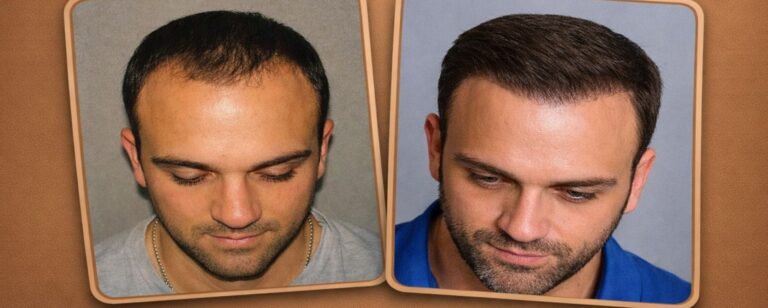
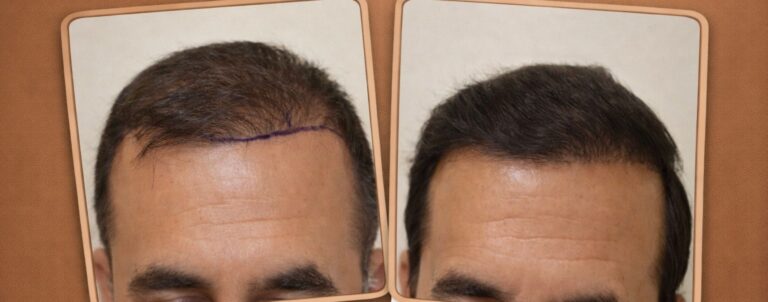
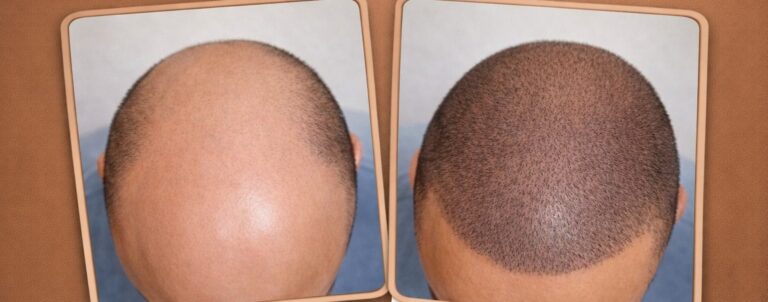
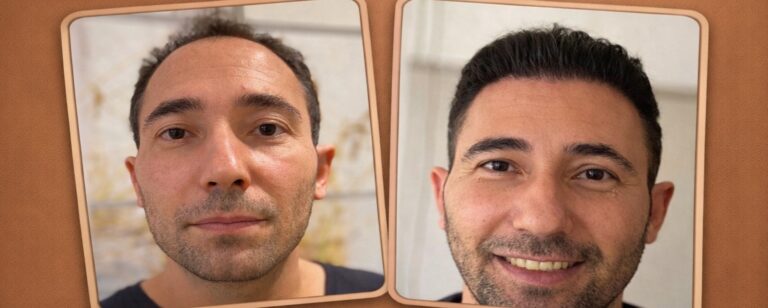
See more real patient results →
⭐ 4.6 on Google Reviews (129 reviews)
Ready to Ask Us These Questions Directly?
Book a free, no-obligation video consultation with Dr. Çelik’s team. Bring this checklist. We welcome every question on it.
Get Your Personalised Consultation — WhatsApp Dr. Çelik’s Team Now
Free consultation · No commitment required · Response within 2 hours
What Is Our Istanbul Clinic Like?
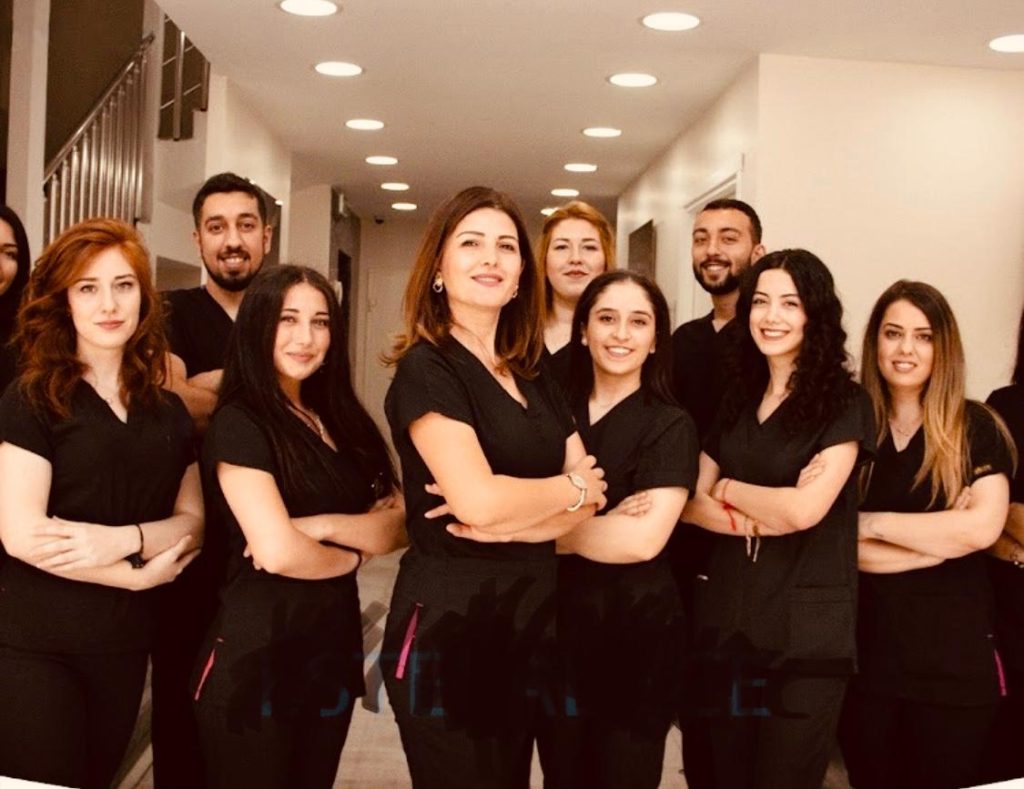
Global Health Hair is located in the heart of Şişli, Istanbul – modern, clean, and designed for a calm, private patient experience from arrival to recovery.

Where Will You Stay in Istanbul?
Your all-inclusive package includes a Premium Boutique Hotel in the Şişli district of Istanbul, at the same location as the clinic, with modern rooms, breakfast, and a 24/7 team. View clinic & hotel location on Google Maps.




Related reading: Meet Dr. Çelik, MD · Is it safe? · FAQ · Real results
Leave a Reply